Quick Answer
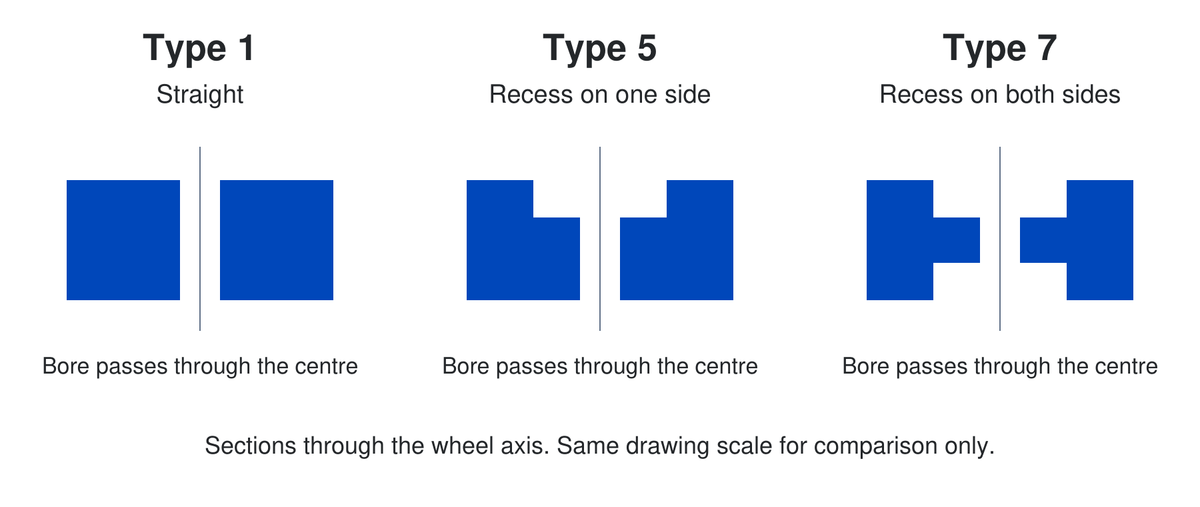
Type 1 is a straight grinding wheel. Type 5 has a recess on one side, and Type 7 has recesses on both sides. To specify a replacement, record the complete profile: outside diameter, thickness, bore and any recess dimensions. Keep that drawing with the wheel specification and machine details so the supplier can check the proposed replacement.
Compare the three wheel profiles
| Shape | Profile | Information to include |
|---|---|---|
| Type 1 | Straight | Diameter, thickness and bore, plus the full product specification |
| Type 5 | Recess on one side | Base dimensions plus recess diameter and depth |
| Type 7 | Recesses on both sides | Base dimensions and the recess details shown for each side |
The toolroom wheel drawings and dimension table show these profiles together. Their section views make the difference easier to see than a photograph taken from the front. A recess is the wider, shallow opening around the bore. The bore continues through the wheel.

Start with the drawing or existing part reference whenever possible. A front photograph may hide the far side. A close crop can also hide whether the opening shown is the through-bore or the larger recess around it. Record an uncertain feature as unknown and include another view.
Record the dimensions that describe the recess
D, T and H identify diameter, thickness and bore in the linked toolroom table. Recessed wheels need additional geometry. Copy the recess dimensions from the part drawing and preserve its units, letter definitions and revision. If a supplier uses a different notation, compare the labelled drawing rather than matching letters in isolation.

3
Our ordering recommendation is to keep a value and its source together. For example, record whether a dimension came from a drawing, the existing label or a supplier catalogue. Keep a missing value blank until it is resolved. A tidy spreadsheet that silently fills an unknown dimension is less useful than an incomplete record that makes the gap visible.
Keep shape, size and wheel specification together
ISO 525:2020 addresses type numbers, dimensional symbols, profiles, specification, designation and marking for bonded abrasive products. Its public scope separates these subjects and excludes coated abrasives and superabrasives. A shape reference therefore belongs alongside the other product information in a purchasing record.
ISO type number and shape
The abrasive specification carries separate information about grain, grit, grade, structure and bond. Manufacturer-specific prefixes and suffixes can also appear. The grinding-wheel specification explainer describes this convention and its variations. Copy the whole marking when asking about a replacement.
A request that says only “Type 5 wheel” leaves the supplier to ask for the missing details. Add the machine model, workpiece material and operation. Record the complete product reference if you have one. This gives the supplier a defined starting point without turning a resemblance between two wheels into a compatibility claim.
Use a complete replacement-wheel enquiry
The following is a purchasing worksheet. It collects information for a supplier to assess. It does not provide mounting instructions, machining settings or permission to substitute a different wheel.
| Field | What to send |
|---|---|
| Existing product | Part reference and a readable photograph of its complete label |
| Shape and drawing | Type number, complete profile and drawing revision |
| Dimensions | Outside diameter, thickness, bore and applicable recess details, with units and tolerances |
| Specification | The full abrasive code, including prefixes and suffixes |
| Machine and job | Machine model, workpiece material and the operation being performed |
| Commercial details | Quantity, required delivery date and any unresolved information |

Compare a quotation against this record line by line. Ask the supplier to identify any proposed difference explicitly. Keep the response with the quotation so a later reorder uses the same agreed description. This also makes it easier to distinguish a missing specification from a genuine change of product.
Find the next product or specification reference
Browse the vitrified bench grinding wheel collection for the products currently listed. For a recessed-wheel requirement, send the complete specification with your enquiry so availability and suitability can be checked. This guide makes no stock claim for Type 5 or Type 7 wheels.
Use the grinding wheel buying guide for the broader selection context, and the wheel label guide to organize the other markings. Follow the current instructions supplied for the particular product and machine.
Frequently asked questions
What is a Type 5 grinding wheel?
A Type 5 wheel has a recess on one side. A complete replacement specification needs the recess dimensions along with the outside diameter, thickness and bore. The shape number alone leaves the abrasive specification and application requirements unresolved.
What is the difference between Type 5 and Type 7?
Type 5 has one recessed side. Type 7 has recessed areas on both sides. Use the complete drawing to check each recess and the remaining wheel section. Matching the broad shape description does not establish that two products are interchangeable.
Does Type 1 mean a particular grit or material?
Type 1 identifies the straight wheel profile. The product specification supplies the abrasive, grit, grade and bond information. Keep the shape and the full specification together when requesting a replacement, and follow the instructions for the particular wheel and machine.
Can I order from a photograph of the wheel?
A photograph can help identify the label and visible profile. Add the existing part reference, a dimensioned drawing, machine details and application. Ask the supplier to resolve missing fields before accepting a substitute. Appearance alone cannot establish the complete specification.
Sources
- Toolroom grinding wheel profiles and dimension table, original manufacturer drawings, accessed 2026-10-29.
- ISO 525:2020: shape types, designation and marking, public scope and publication record, accessed 2026-10-29.
- Grinding wheel basics and specification codes, manufacturer technical article, 2021.