Quick Answer
Prevent grinding burn by keeping the abrasive cutting instead of rubbing: use a sharp self-sharpening grain such as ceramic alumina, run light to moderate pressure, keep the disc moving in overlapping strokes, and replace a glazed or loaded disc rather than pushing harder. Heat tint — the straw-to-blue discoloration — is the visible warning that the surface is overheating.
What grinding burn and heat tint actually are
"Grinding burn" and "heat tint" describe the same root problem from two angles: too much heat went into the part instead of leaving with the chip. Heat tint is the colored oxide film you can see; grinding burn is the metallurgical damage underneath that you often cannot.
Heat tint is an optical effect. When the surface heats enough to oxidize, a thin transparent oxide film grows, and light reflecting off the top and bottom of that film interferes to produce color that shifts with film thickness (BSSA; Wikipedia). Because the film thickens with both temperature and time at temperature, the color is an indicator of thermal history — a relative warning, not a precise thermometer.
Grinding is an intensely thermal process. Localized flash temperatures at the grain–workpiece interface can reach roughly 1,500 °C in heavy stock removal, and the energy that does not leave with the hot swarf flows into the workpiece, the wheel, and the air (manufacturer data). The goal of every technique below is to maximize the fraction of energy that exits as a chip and minimize the fraction that becomes friction heat in the part.
Reading the colors — straw to blue
On steel, the oxide color is a rough thermometer you can use as a stop signal:
| Color | Approx. temperature |
|---|---|
| Faint straw / pale yellow | ~200–230 °C |
| Brown / bronze | ~250–270 °C |
| Purple | ~280 °C |
| Blue | ~290–320 °C |
| Grey / scaled | >330 °C |
On stainless, the same progression runs higher in absolute terms — pale yellow around ~290 °C, blue around ~540 °C, dark blue around ~600 °C — and the oxide grows from roughly 20 nm at pale yellow to over 200 nm at black scale (BSSA; CXP Solutions). Any visible bluing means you are in the discoloration range; stop and check the disc before you keep going.
Why heat tint is more than cosmetic
The blue marks on metal are not just an appearance defect. On stainless steel, the oxide film grows by pulling chromium and iron out of the surface, so the metal immediately beneath the tint becomes chromium-depleted — and chromium is what builds the self-healing passive layer that makes stainless "stainless" (CXP Solutions). A heat-tinted band is therefore a corrosion-prone band.
The trap: standard passivation does not remove heat tint or restore the depleted chromium. It only rebuilds the passive film on metal that is already chromium-rich, so a part can look clean after passivation and still rust at the old tint line. The tint has to be physically or chemically removed first (CXP Solutions). For more on protecting stainless surfaces, see our guide to the best abrasives for stainless steel and avoiding heat tint.
Below the surface, the same heat can do worse. There are two recognized burn modes:
- Temper burn — peak workpiece temperatures around ~600 °C over-temper hardened steel, softening the surface and leaving tensile residual stress that cuts fatigue life.
- Re-hardening burn — at the austenitizing point (~723 °C) the surface re-austenitizes and self-quenches into a brittle, untempered white layer of martensite, with residual stresses that seed cracks.
Worst of all on stainless is sensitization: holding the steel in the 425–815 °C band precipitates chromium carbides at grain boundaries and invites intergranular corrosion or stress-corrosion cracking. Sensitization is invisible — a polished-looking weld blend can pass a visual check and fail later in service. That is exactly why "cool cutting" is a quality spec, not a comfort feature.
The single biggest cause: a disc that rubs instead of cuts
Grinding energy splits across three actions at the cutting point, and the split decides how much heat ends up in the part:
| Mechanism | What happens | Heat into workpiece |
|---|---|---|
| Cutting (chip formation) | Grain shears a chip; energy leaves with hot swarf | Lowest — heat exits the part |
| Plowing | Grain pushes material aside without removing it | High — pure deformation heating |
| Rubbing | Dull or glazed grain slides without cutting | Highest — almost all energy becomes friction heat |
Peer-reviewed grinding-energy modeling formalizes the same picture: grit engagement passes through friction, plowing, and shearing regimes separated by critical depth-of-cut thresholds (Linke et al., 2017, Grinding Energy Modeling Based on Friction, Plowing, and Shearing). The practical lesson is that grain sharpness matters more for temperature than raw hardness: a sharp grain shears and carries heat out in the chip; a dull one rubs and dumps heat into the steel.
That means the two abrasive failure modes — glazing and loading — are the most common hidden causes of burn:
- Glazing is the grain wearing flat and burnishing the work instead of fracturing to renew its edge. The hallmark is heat with no stock removal: the disc polishes the part and pumps energy in as burn. Fix it by switching to a self-sharpening grain, a softer grade or more open structure, or by applying more (not less) effective pressure so the grain fractures.
- Loading is swarf clogging the spaces between grains so the abrasive can no longer reach the work; once the surface gets hot, adhesion accelerates and loading snowballs. Fix it with an open-coat construction, a stearate or grinding-aid coating, coarser grit, and good extraction.
If you are fighting these on a flap disc specifically, our flap disc troubleshooting guide walks through wobble, overheating, glazing, and short life in detail.
How to prevent grinding burn — step by step
These are the operator levers that prevent burn without changing the part or adding coolant.
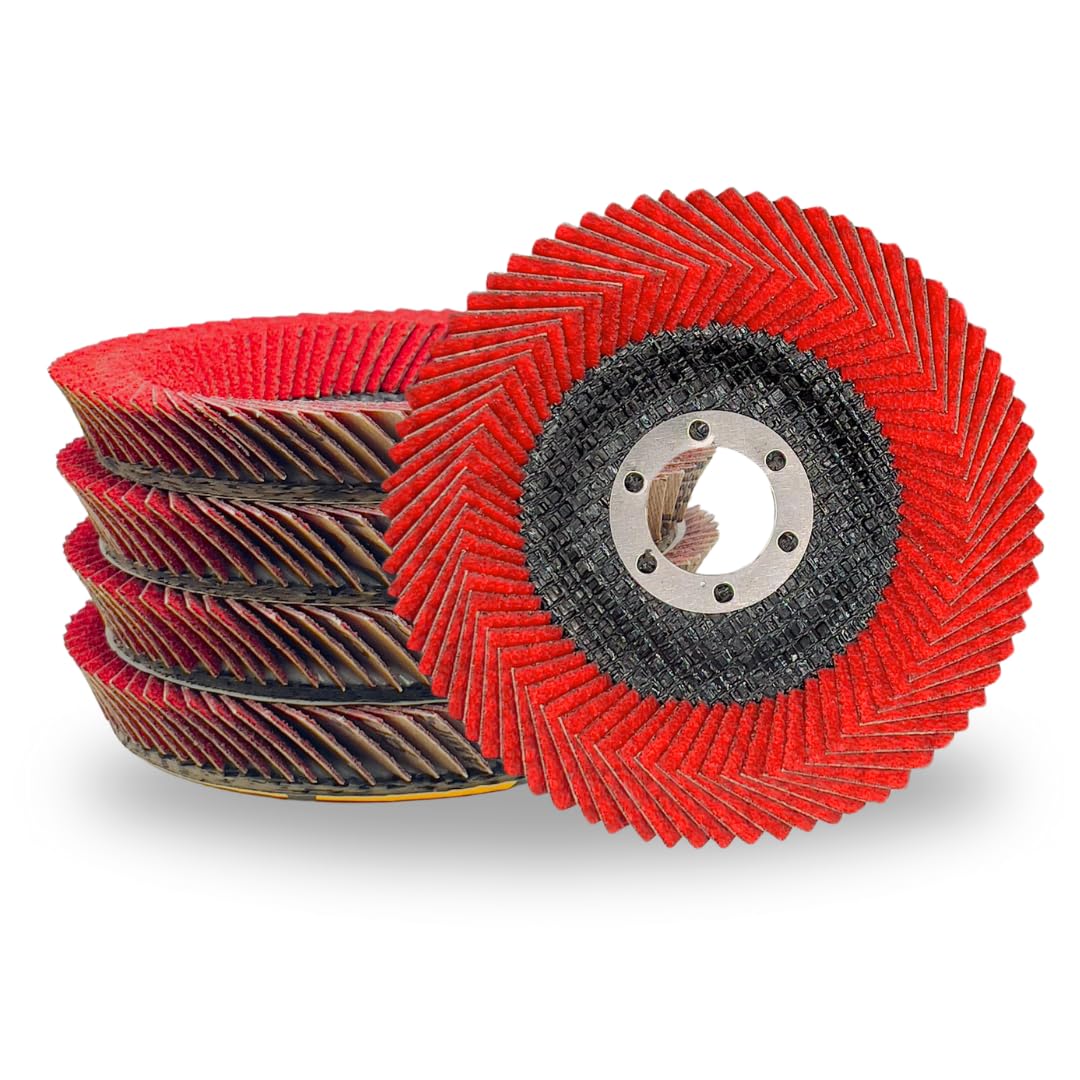
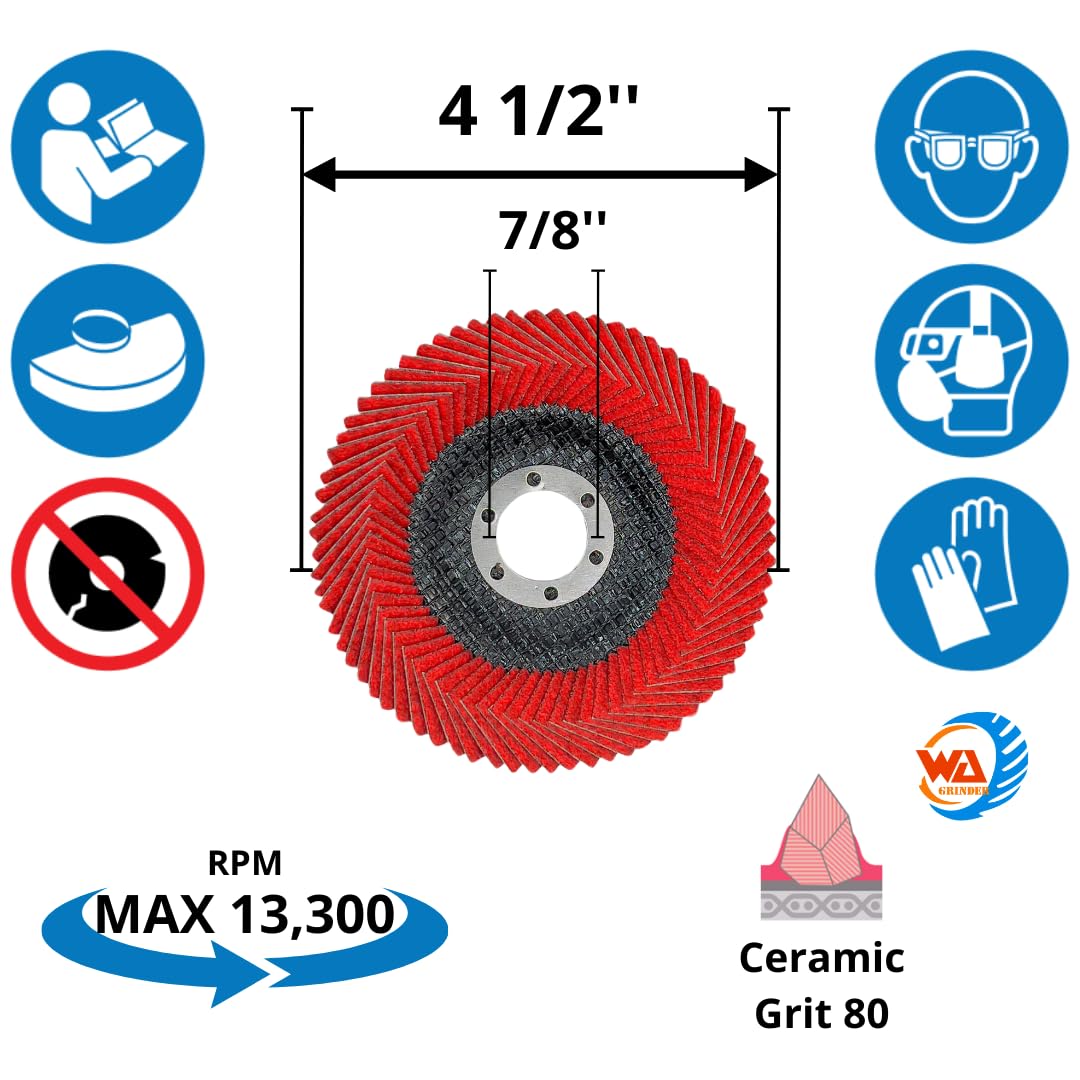
- Match the grain to the metal. On hard, tough, heat-sensitive metals — stainless, hardened and tool steels, nickel alloys, titanium — use a self-sharpening grain. Ceramic alumina self-sharpens by controlled micro-fracture (new edges expose under light pressure), making it the coolest-cutting option; zirconia alumina self-sharpens by macro-fracture but needs heavier pressure to activate (manufacturer data).
- Let the abrasive do the work — control pressure. Use light to moderate pressure so the grain cuts a chip. Excess pressure raises both heat and wear. On ceramic and zirconia, too little pressure is also a problem: the grain glazes instead of fracturing, which spikes heat.
- Keep the disc moving. Use oscillating, overlapping back-and-forth strokes to spread heat across the surface instead of dwelling in one spot.
- Match speed to the material. Run heat-sensitive stainless and thin sheet at the lower end of the disc's rated speed range; high surface speed with light contact polishes grain tips and glazes them.
- Step grits in sequence. Don't skip grades — each grit should cut efficiently rather than rub through work the previous grit should have removed.
- Reach for the right product before coolant. For metal grinding, switch to an open-coat or grinding-aid (active-filler) disc, and to a thinner cut-off wheel, before resorting to flood coolant. A thinner 0.045 in / 1.1 mm cut-off wheel generates less friction and transfers less heat than a traditional 1/8 in / 3.2 mm wheel.
- Stop at the first sign of bluing. Heat tint is your feedback loop. If you see straw or blue forming, let the part cool and check the disc for glazing or loading before continuing — don't push harder into a disc that has stopped cutting.
What "cool-cut" features actually buy you
The cool-cutting levers above are built into product, not just technique. As a documented benchmark, one manufacturer's cool-cutting line embeds active grinding additives in the coating and uses a cooling-slot disc geometry, claiming up to 30% lower workpiece temperature, up to 25% higher stock removal, and up to 30% longer disc life versus the standard line (manufacturer data). Another major brand markets significantly reduced heat generation that minimizes discoloration and rework on stainless (manufacturer data). The mechanisms behind those claims — self-sharpening grain, open coat, and a cryolite or potassium-fluoroborate grinding aid in the supersize coating — are well documented (US Patents 4,475,926 and 5,219,463) and are the same levers any value-tier disc can be specified to use.
A useful caveat: ceramic alumina only earns its 3–5x price premium when it is run hard and fast on tough or heat-sensitive metals. On a light-pressure hand job or a low-power tool it won't micro-fracture, so it dulls and glazes like ordinary aluminum oxide while still costing more. For light deburring or soft metals, a correctly specified zirconia or open-coat aluminum-oxide disc is the right tool. If you are unsure which bonded wheel spec fits your job, our grinding wheel buying guide breaks down Type 27, spec codes, and grit selection.
The Whitby Abrasives recommendation
To choose a cool-cutting disc, look for self-sharpening grain, an open coat and a grinding-aid coating, and ask for cut-rate and workpiece-temperature data before you trust a bare "cool cut" sticker. For grinding and weld blending on stainless and hardened steel, start with our grinding discs; for blending and finishing where a fanning, air-cooling geometry helps, our flap discs are stocked in our Whitby, Ontario warehouse for fast domestic fulfillment.
The obvious objection is that a value-tier disc must cut hot to be cheap. It doesn't: heat comes from a glazed or loaded grain, and the fix is the correct grain, coat, and grit spec — not the highest price. A disc that demonstrably resists glazing means fewer discs, less rework on heat-tinted stainless, and lower total cost than a cheap disc that burns in minutes.
Frequently asked questions
What causes grinding burn and blue marks on metal?
Grinding burn is caused by heat building up in the part instead of leaving with the chip. The most common cause is a disc that rubs or plows instead of cutting — usually a glazed (dulled) or loaded (clogged) abrasive, too much pressure, or the wrong grain for the metal. The blue marks are a thin oxide film whose color tracks how hot the surface got.
How do I remove heat tint from stainless steel?
Heat tint must be physically or chemically removed, then the surface passivated — passivation alone does not fix it. Mechanical methods (stainless wire brush, flap disc, non-woven surface-conditioning disc), chemical pickling (nitric, or nitric with hydrofluoric acid), or electrochemical weld cleaning all work. The sequence for welds is degrease, remove tint, rinse, then passivate (CXP Solutions).
Does grinding burn weaken the metal?
Yes. Beyond the cosmetic tint, heat can over-temper hardened steel (softening it and leaving tensile stress that cuts fatigue life) or re-harden the surface into a brittle white layer that seeds cracks. On stainless, holding the metal in the 425–815 °C band can cause sensitization — invisible chromium-carbide precipitation that invites intergranular corrosion later in service.
What is the best abrasive to avoid burning stainless steel?
A self-sharpening grain run at the right pressure. Ceramic alumina cuts coolest because it self-sharpens by controlled micro-fracture; zirconia alumina is a durable mid-tier choice but needs firmer pressure to stay sharp. Pair either with an open-coat construction and a grinding-aid coating, and keep the disc moving.
Why does my disc stop cutting and start burning?
Because it has glazed or loaded. A glazed disc has dulled grains that burnish instead of cut; a loaded disc is clogged with swarf. Both leave a smooth, shiny face that rubs and generates heat with little stock removal. Replace or deglaze the disc and check your pressure and grain choice rather than pushing harder.
Will running slower stop grinding burn?
It helps on heat-sensitive metals, but it is not the whole answer. Very high speed with light contact glazes grain tips, so matching speed to the material reduces heat — but if the grain is dull or the disc is loaded, slowing down only delays the burn. Fix the cutting action first (grain, pressure, open coat), then tune speed.
Sources
- British Stainless Steel Association (BSSA), Heat Tint (Temper) Colours on Stainless Steel Surface Heated in Air — https://bssa.org.uk/bssa_articles/heat-tint-temper-colours-on-stainless-steel-surface-heated-in-air/
- CXP Solutions, Heat Tint Removal Guide (formation temperature, oxide thickness, chromium depletion, passivation limits) — https://cxp-solutions.com/guides/heat-tint-removal-guide/
- Wikipedia, Tempering (metallurgy) — temper-color chart and thin-film-interference mechanism — https://en.wikipedia.org/wiki/Tempering_(metallurgy)
- Linke, B., Garretson, I. C., Torner, F. M., & Seewig, J. (2017). Grinding Energy Modeling Based on Friction, Plowing, and Shearing. Journal of Manufacturing Science and Engineering. DOI 10.1115/1.4037239 — https://doi.org/10.1115/1.4037239
- Cui, X., Li, C., Zhang, Y., Ding, W., An, Q., Liu, B., Li, H., & Said, Z. (2022). Comparative assessment of force, temperature, and wheel wear in sustainable grinding aerospace alloy using biolubricant. Frontiers of Mechanical Engineering. DOI 10.1007/s11465-022-0719-x — https://doi.org/10.1007/s11465-022-0719-x
- AWS D18.2 — Guide to Weld Discoloration Levels on Inside of Austenitic Stainless Steel Tube (weld-discoloration acceptance standard for austenitic stainless tube).
Shop Whitby Abrasives
Industrial-grade abrasives for Canadian fabricators — available for online order and local pickup in Whitby, Ontario.
Product Catalogues: Cutting Wheels • Grinding Wheels • Flap Discs • Sanding Belts • Sanding Discs • Strip Discs • Polishing Wheels • Rubber Deburring Wheels • Nylon Fibre Deburring Wheels • Mounted Flap Wheels • Vitrified Bench Grinding Wheels • Accessories
📧 info@whitbyabrasives.com • 📍 1450 Victoria Street East, Unit 2, Whitby, ON L1N 0N7 • About Us • Contact Us