
British Columbia's LNG sector just crossed a threshold. On June 1, 2026, Fluor Corp received a limited notice to proceed on LNG Canada's Phase 2 expansion, a project that will roughly double Coastal GasLink's pipeline capacity to about 5 billion cubic feet a day. Less than a month later, the Ksi Lisims LNG project, backed by the Nisga'a Nation, signed a heads of agreement with Germany's SEFE for a share of its planned output, a step toward a final investment decision expected before the end of 2026.
Add a Pacific Link oil pipeline targeting construction in September 2027 and a Prairie Connector pipeline decision expected by mid-2027, and the west coast energy corridor is looking at a multi-year construction cycle with one shared requirement: welders. That requirement runs straight through to the grinding wheels, cutting discs, and flap discs those welders use every shift.
A buildout measured in billions, not millions
LNG Canada's first phase exported its first cargo on July 1, 2025, and by April 2026 was running at roughly 87% utilization, moving close to 1.6 billion cubic feet of gas a day through two trains. Phase 2 adds to that base. Ksi Lisims is targeting a full capacity of 12 million tonnes of LNG a year if it reaches a final investment decision.
Analysts tracking the broader buildout put total construction spending above $200 billion through the next decade, with roughly $170 billion of that concentrated in British Columbia. That figure covers pipe, processing modules, compressor stations, and marine terminals, almost all of it welded steel.
The welding bottleneck behind it
Canada cannot supply that buildout from domestic mills alone. The country has one large-diameter line-pipe mill, in Regina, and one steel-plate producer, Algoma Steel in Sault Ste. Marie, Ontario. More than half the steel plate used on these projects gets imported.
Labour is the tighter constraint. The Canadian Welding Bureau's employment survey counted over 81,000 welders working in Canada, with roughly 15,000 approaching retirement age. The federal Canadian Occupational Projection System forecasts about 25,600 welding job openings between 2024 and 2033, most of them backfilling retirements rather than net new growth. An apprentice who starts training in 2027 will not certify until 2030 or 2031 at the earliest, and only about half of apprentices finish within six years.
What a welding boom means for abrasives
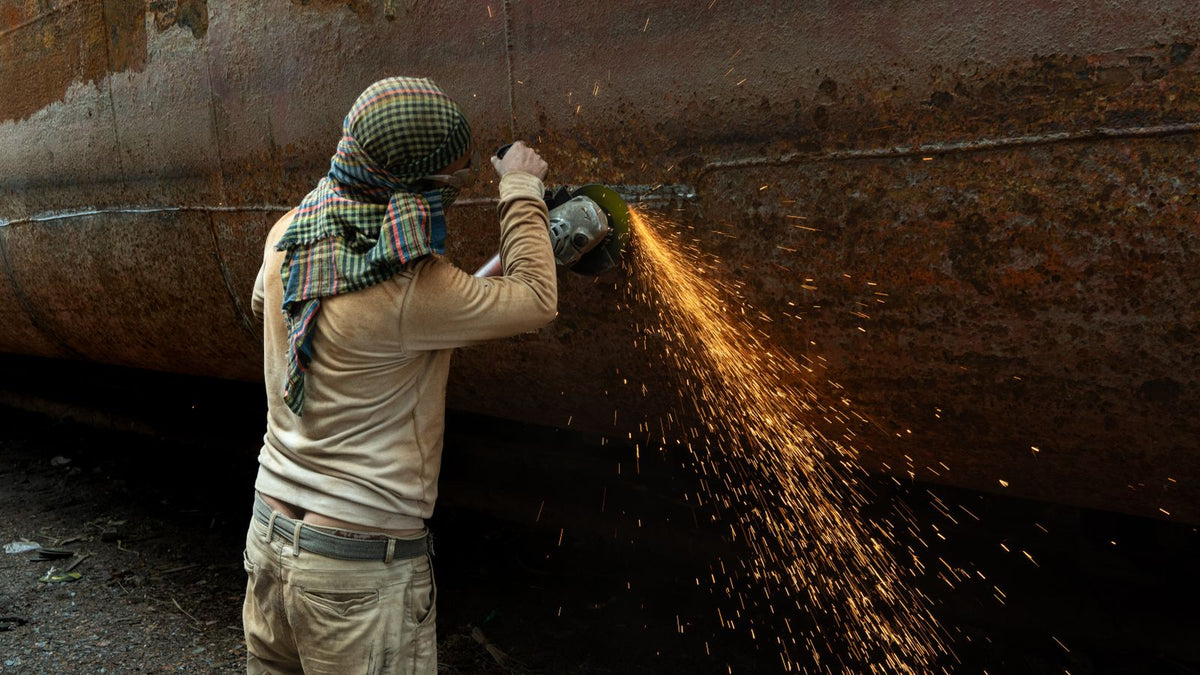
Every weld on a pipeline spread gets ground, beveled, and finished before and after the arc goes down. Bevel prep on line pipe uses cutting and grinding wheels sized to the pipe schedule. Cap and root passes get dressed with flap discs. Wire brushes clear scale and slag between passes so inspectors can read the weld. A crew running pipeline spreads through a BC winter burns through consumables at a pace that outstrips a typical fabrication shop by a wide margin.
That consumption builds across LNG terminals, compressor stations, and the pipeline right-of-way itself, layering on top of demand already building from other sectors. Industry leaders have flagged tighter lead times on imported wheels and discs through 2026, and a crew stuck waiting on a disc order loses more in downtime than the order ever cost.
What this means for WA customers
Fabricators and welding contractors working anywhere near the BC or Alberta energy corridor should plan procurement further ahead than the last few years allowed. Stock levels on cutting and grinding wheels, flap discs, and wire wheels deserve a second look if your crew bids work tied to LNG Canada Phase 2, Ksi Lisims, or the pipeline projects feeding them.
Shops outside that corridor are not exempt. Skilled welders move toward the highest-paying contracts, and a tighter national welder supply pulls more of that labour toward energy-sector work. Locking in supplier relationships now is a more reliable path than reacting after the next price adjustment or lead-time stretch.
Browse Whitby Abrasives' full range of cutting discs, grinding wheels, flap discs, and wire brushes in our catalog to stock up ahead of your next big job.
Frequently asked questions
Why does pipeline construction use so many grinding and cutting discs? Every weld on a pipeline needs prep before the arc goes down and finishing after. That means cutting discs for bevels, grinding wheels for weld caps, and wire brushes to clear slag so inspectors can check the weld.
Will Canada's welder shortage affect abrasives prices or availability? The effect is indirect. Energy-sector projects pulling welders toward British Columbia and Alberta also pull abrasives consumption toward those regions, which can tighten supply for shops bidding similar work elsewhere.
When is LNG Canada Phase 2 expected to be finished? Fluor Corp received a limited notice to proceed on June 1, 2026. No completion date has been published, but the expansion is expected to roughly double Coastal GasLink's pipeline capacity once finished.