
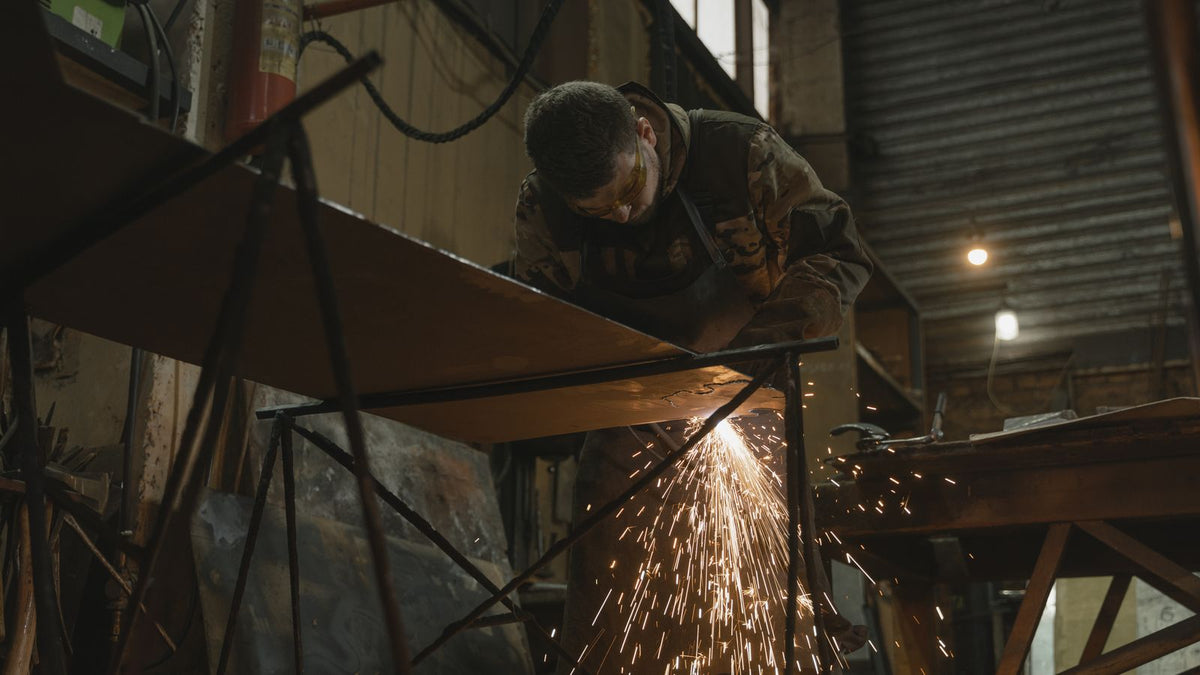
Service centers across Canada shipped more steel and aluminum in August 2026 than a year earlier, according to data the Metals Service Center Institute published in late September. Steel shipments rose 8.3 percent and aluminum shipments rose 1.3 percent compared to August 2025, even as a trade dispute with the United States kept tariffs and import bans in the headlines all month. That volume has to go somewhere, and a meaningful share of it ends up under an angle grinder or a cut-off saw before it becomes a finished part.
At the same time, a separate report on Canadian manufacturing sentiment told a cooler story. The two readings together give fabrication shops a more complete picture than either one alone, and a more useful one for planning abrasives purchases through the rest of the year.
Shipment volume is still climbing
MSCI's August data showed steel shipments through Canadian service centers up 8.3 percent and aluminum shipments up 1.3 percent year over year. South of the border, U.S. steel shipments climbed 11.6 percent and aluminum 13.8 percent over the same period. Both countries posted gains across both metals for the month, which points to fabrication shops still pulling material through the supply chain at a healthy pace despite the cost pressure tariffs have added this year.
For a shop that cuts, grinds, and finishes that material, rising shipment volume is the more direct demand signal. Steel and aluminum do not get shipped to sit in a rack. They get cut to size, welded, and ground smooth, and every one of those steps runs through cutting discs, grinding wheels, and flap discs.
Confidence is sliding even as the work keeps coming
S&P Global's Canada Manufacturing PMI for September came in at 51.5, down from 53.0 in August and the lowest reading in six months. The survey's new orders index slipped below 50 for the first time since March, and the future output index, which measures how optimistic manufacturers are about the next 12 months, fell to 54.6 from 58.7, its lowest point since December 2025. Input costs jumped to 71.1 from 66.4, the highest reading since July 2022, and delivery delays were the most widespread since August 2022.
Paul Smith, economics director at S&P Global Market Intelligence, attributed the pressure to tariffs and elevated global energy prices. The survey also noted manufacturer confidence had dropped to its lowest level in nine months. Shipments and sentiment are not telling the same story right now. Material is still moving through shops at a strong pace, but the people running those shops are less sure the pace holds into next year, and their own suppliers are taking longer to deliver.
What this means for WA customers
A shop reading these two reports side by side should take a couple of practical signals from them:
- Current consumable demand reflects real, growing shipment volume, not just backlog from earlier in the year. If your bins of cutting discs and grinding wheels are emptying faster than usual, the national data backs up what you are seeing on the floor.
- Stretched delivery times are showing up across the whole supply chain, imported metal included. Confirm lead times with your abrasives supplier before committing to a big job, rather than assuming stock on hand today will still be there next month.
- A softer new-orders reading and falling future-output confidence suggest some shops are being more cautious about what they commit to next quarter. If your own order book is cooling, that lines up with the broader sector rather than pointing to a problem specific to your shop.
- Match consumable stock to the metal actually coming through the door. Rising aluminum volume in particular calls for confirming your flap discs and non-woven wheels are specified for non-ferrous work, not carried over from a mostly-steel job mix.
Browse WA's full abrasives catalog to restock cutting discs, grinding wheels, and flap discs against whatever mix of steel and aluminum your shop is running this quarter.
Frequently asked questions
Q: Does rising steel and aluminum shipment volume mean grinding wheel and cutting disc demand is rising too?
A: It is a reasonable read on the data. Service centers do not ship material to sit in inventory. Most of it moves on to fabrication shops for cutting, welding, and finishing, and each of those steps consumes abrasives.
Q: Why is manufacturing confidence falling if shipments are still increasing?
A: The two measures track different things. Shipment data reflects material that already moved. The PMI survey reflects how manufacturers feel about new orders and the months ahead, and that outlook has been dented by tariffs, energy prices, and slower deliveries.
Q: Should a shop stock up now or wait given these mixed signals?
A: Both reports point toward the same practical move: confirm lead times with your supplier rather than assuming today's stock levels hold, and size orders to your actual job mix instead of guessing based on headlines alone.