Quick Answer
Use aluminum oxide on ferrous metals — carbon and alloy steel, stainless, cast iron — where its toughness and chemical inertness toward iron give long life. Use silicon carbide on stone, glass, ceramics and non-ferrous metals, where its higher hardness and friability cut faster and cooler. The grain follows the workpiece, not the price tag.
The one decision that drives everything
Aluminum oxide (Al₂O₃) and silicon carbide (SiC) are the two dominant conventional abrasive grains, and picking between them is the single most common spec mistake we see. The instinct is "harder is better." It is wrong. Silicon carbide is harder than aluminum oxide, yet it wears away fast on tough steel — so the harder grain is the worse choice on the most common workpiece on earth.
The right call turns on two grain properties working together — hardness plus friability versus toughness — and on a third factor most buyers never hear about: chemistry. Get all three right and you get a Consistent Cut, Predictable Life, and a lower cost per part. This guide gives you the rule, the numbers behind it, and the cases where the answer flips.
Hardness, toughness, and friability — the property trade-off
Aluminum oxide in abrasive form is α-alumina (corundum), the same crystal as ruby and sapphire. Silicon carbide is a covalent ceramic, historically branded "Carborundum." Their headline properties:
| Property | Aluminum oxide (Al₂O₃) | Silicon carbide (SiC) |
|---|---|---|
| Mohs hardness | ~9.0 | ~9.1–9.5 |
| Knoop hardness | ~1,950–2,000 kg/mm² (commodity) | ~2,480–2,600 |
| Toughness | Higher (resists fracture) | Lower (brittle) |
| Friability | Lower — holds form under heavy load | Very high — fractures to expose fresh edges |
| Cutting action | Durable, persistent under pressure | Fast, cool, free-cutting |
| Melting / decomposition | Melts ~2,072 °C | Decomposes ~2,830 °C (does not truly melt) |
| Thermal conductivity | Lower | ~135 W·m⁻¹·K⁻¹ (α-SiC), comparable to copper |
| Relative price | Baseline | 1.2–1.5× AO |
SiC is harder and sharper but more brittle, so it fractures and wears faster under the heavy, sustained load that grinding steel imposes. Aluminum oxide is slightly softer but tougher, so it holds its form and keeps cutting where SiC would crumble. That is the whole trade-off in one sentence — and it is why the harder grain is not the default winner.
Why SiC cuts cooler
SiC's thermal conductivity (~135 W·m⁻¹·K⁻¹, α-SiC) is roughly that of copper, far above aluminum oxide. It pulls heat out of the cut. Combined with its high friability — it self-sharpens by fracturing to expose fresh edges — SiC delivers a cooler, free-cutting action on heat-sensitive substrates like glass, stone and non-ferrous metal. That cool-cut advantage is the hook for stone, glass and non-ferrous work, not for steel.
The factor nobody mentions: grain–workpiece chemistry
Hardness and friability are the mechanical story. There is a separate, decisive axis: whether the grain reacts chemically with the workpiece at the temperature inside a grinding contact, which can approach the workpiece's melting point.
- Aluminum oxide is chemically inert toward iron. It does not react with steel, so its only limit on ferrous metal is mechanical dulling. This is precisely why AO is the ferrous workhorse grain.
- Silicon carbide reacts with and dissolves into iron at grinding heat. On top of being brittle, SiC is chemically the wrong grain for high-tensile ferrous work — it "melts away" against the metal. It is favoured on cast iron, non-ferrous, glass and stone, where there is little or no iron to react with.
The textbook proof that hardness alone misleads is diamond: it is the hardest material known and the worst grain for ordinary steel, because carbon graphitises and diffuses into iron at grinding temperatures (American Machinist, 2024; IOPscience chemical-wear review, 2019). SiC sits on the same chemical fault line for high-speed steel. So the rule is: match grain chemistry to the metal first, then optimise hardness and toughness.
Chemical compatibility at a glance
Chemical fit only (ignores hardness/toughness). "Good" = inert at grinding heat; "Poor" = reacts or dissolves.
| Grain | Ferrous (steel, cast iron) | Non-ferrous (Al, brass, Cu) | Stone / glass / ceramic |
|---|---|---|---|
| Aluminum oxide | Good (inert to iron) | Good | Fair |
| Silicon carbide | Poor on steel; OK on cast iron | Good | Good |
When aluminum oxide wins
Aluminum oxide is the commodity tier of the grain ladder — tougher and more forgiving than premium grains, and the base grain across the bulk of conventional cutting, grinding, flap and fibre products. It holds 39.10% of the abrasives market by grain type in 2025. Reach for it when:
- You are working ferrous metal — aluminum oxide for steel is the default. Carbon and alloy steel, stainless, and irons all favour AO's toughness and chemical inertness. For heavy stock removal where life and cost-per-part dominate, AO is the right call.
- Stainless or titanium is on the bench. Specify the white fused alumina (WFA) grade: ≥99.5% Al₂O₃, iron-free, more friable, runs cooler. Brown fused alumina (BFA) carries Fe₂O₃, which risks rust spotting and weld defects on stainless. (See our guide to the best abrasives for stainless steel for the full contamination picture.)
- Cost per part matters more than peak speed. BFA is the toughest, longest-lasting, lowest-cost grade — the everyday grain for general mild-steel cutting, grinding and sanding.
The two main grades cover most ferrous work: brown (BFA, ~94.5–98% Al₂O₃, toughest, lowest cost) and white (WFA, ≥99.5% Al₂O₃, more friable, cooler, contamination-free for stainless and titanium).
When silicon carbide wins
Silicon carbide is the standard grain for stone, tile, ceramics, glass and non-ferrous metals, and the second-most-common conventional grain after AO. It commands a 1.2–1.5× price premium over aluminum oxide. Reach for it when:
- SiC for masonry, stone and concrete. Stone has no iron to react with, so SiC's hardness and cool cut win outright. Black SiC (<95% SiC) is the workhorse for masonry, cast iron, bronze and general cut-off in this space.
- Glass, ceramics and non-ferrous metals. SiC cuts these faster and cooler than AO, which loads and dulls on soft, gummy or brittle materials. Aluminum is the classic mixed case — it benefits from a hard, cool-cutting grain, so SiC, often blended with AO, is common there.
- Fine or wet finishing. SiC's friability and sharp, free cut suit fine work and polishing.
There are two abrasive grades: black SiC (<95% SiC, iron-impurity coloured — the cost-effective masonry/stone workhorse) and green SiC (~97–99% SiC, sharper, for precision grinding of tungsten/sintered carbide tools, ceramics and optics).
Spec-honesty note: do not let a salesperson route SiC onto steel because it "sounds harder." SiC wears fast on tough ferrous work and reacts with iron. Likewise, do not buy premium aluminum oxide grades for a job a tough brown grade handles fine. For a deeper material-by-material walkthrough, see our abrasive grain selection by material guide.
Cast iron — the case that splits the difference
Cast iron is the interesting exception. It is ferrous, but its high carbon content and brittle, chip-forming behaviour make it one of the few ferrous materials where SiC performs well — black silicon carbide is a standard grain for cast iron, bronze and aluminum. Aluminum oxide also works on iron. The choice comes down to the operation: SiC for free, cool cutting on the brittle skin and scale; AO where toughness and life matter. Our cast iron and foundry cleanup guide covers gates, risers and parting-line removal in detail.
The Whitby Abrasives recommendation
Whitby Abrasives specifies aluminum oxide across our value-tier ferrous lines and silicon carbide where the substrate is stone, glass or non-ferrous — because the grain should follow the workpiece, not the lowest sticker price. Whatever brand you buy, check that the listing names the grain grade: black or green SiC, brown or white AO. If it does not, ask before you order.
The obvious objection — "value-tier means low quality" — is backwards here. Buying a premium engineered grain for a light job wastes money, and buying a mis-sold "harder is better" SiC wheel for steel wastes the wheel. Matching grain to metal is what cuts your cost per part.
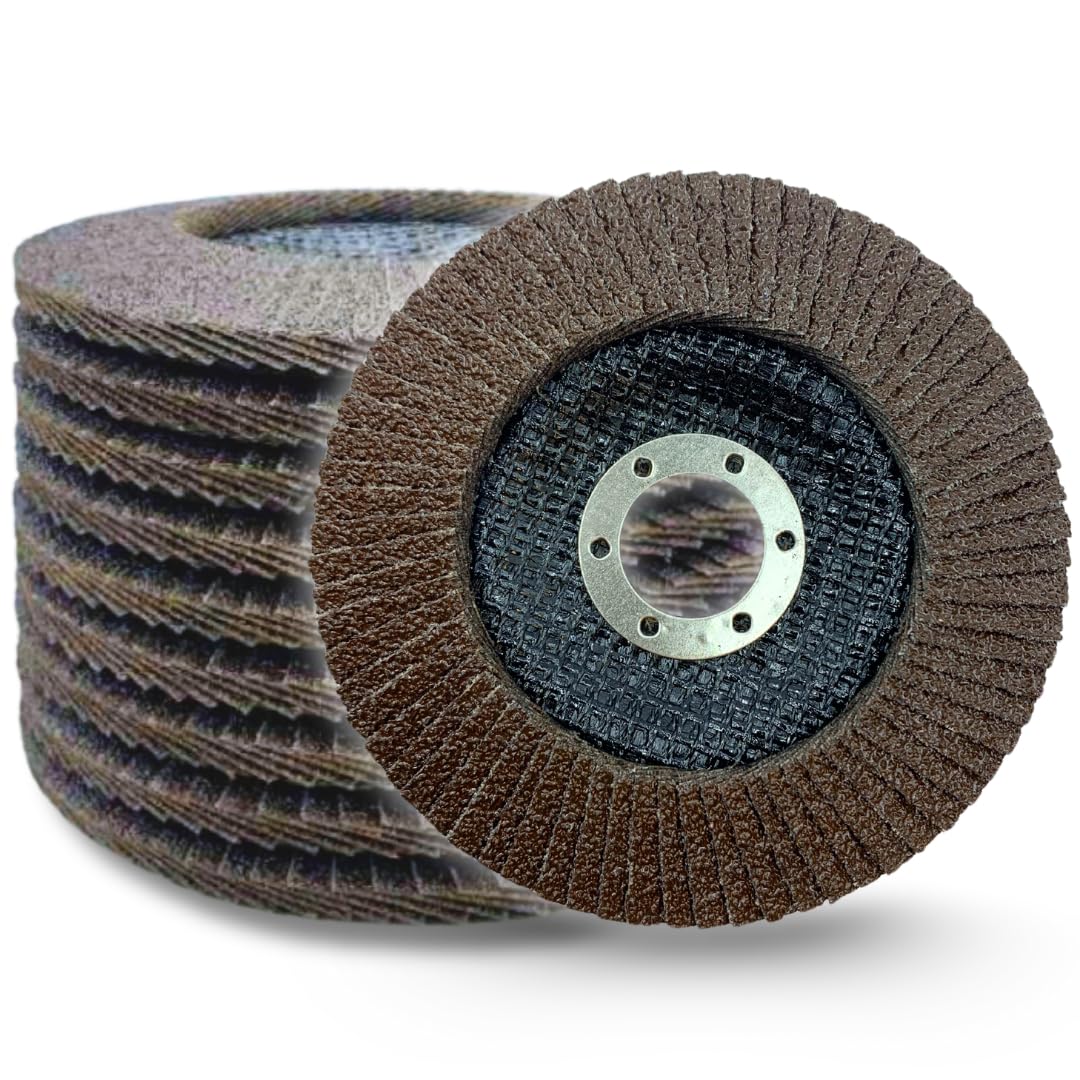
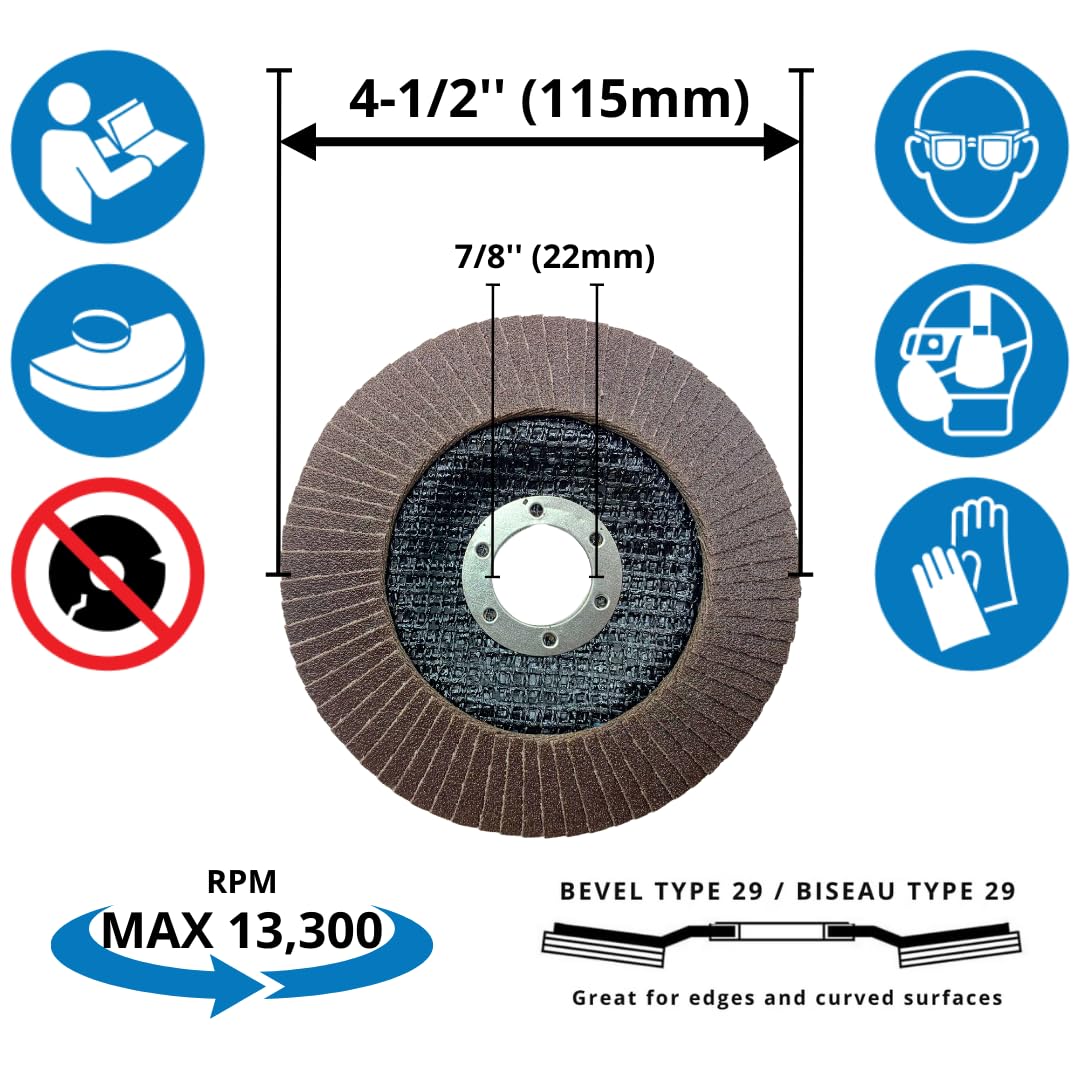
- For aluminum-oxide ferrous work, browse our grinding discs and flap discs.
- For masonry, stone and non-ferrous cut-off, see our cut-off wheels.
All stocked in our Whitby, Ontario warehouse for fast domestic fulfillment to Canadian fabricators.
Frequently asked questions
Is aluminum oxide or silicon carbide better for steel?
Aluminum oxide is better for steel. It is tougher and chemically inert toward iron, so it lasts longer on ferrous metal. Silicon carbide is harder but brittle, and it reacts with and dissolves into iron at grinding heat — so it wears away fast on tough steel despite being the harder grain.
Why is silicon carbide better for stone and masonry?
Stone, concrete and glass contain no iron for silicon carbide to react with, so SiC's higher hardness and high friability give a fast, cool, free-cutting action. Its thermal conductivity (~135 W·m⁻¹·K⁻¹, comparable to copper) pulls heat out of the cut, which suits brittle, heat-sensitive masonry and glass.
Is silicon carbide harder than aluminum oxide?
Yes. Silicon carbide is ~9.1–9.5 Mohs (Knoop ~2,480–2,600) versus aluminum oxide at ~9.0 Mohs (Knoop ~1,950–2,000 for commodity grades). But SiC is more brittle, so it is harder yet shorter-lived on tough ferrous work. Hardness alone does not pick the grain.
Which grain should I use on aluminum or other non-ferrous metals?
Silicon carbide, often blended with aluminum oxide. Soft non-ferrous metals like aluminum and brass tend to load and dull aluminum oxide, while SiC's sharp, cool, free-cutting action clears the swarf and resists loading. There is no iron present, so SiC's chemical limit on steel does not apply.
Does white aluminum oxide matter for stainless steel?
Yes. White fused alumina (≥99.5% Al₂O₃) is iron-free and more friable, so it runs cooler and avoids the iron contamination that brown aluminum oxide can leave on stainless — which risks rust spotting and weld defects. Specify white AO for stainless and titanium.
Is silicon carbide worth the higher price?
It is when the workpiece demands it — stone, glass, ceramics and non-ferrous metals, where SiC cuts faster, cooler and cleaner than aluminum oxide. SiC runs about 1.2–1.5× the price of AO, so paying that premium on ferrous steel, where AO outlasts it, is wasted money.
What is aluminum oxide?
Aluminum oxide (Al₂O₃) is the most common conventional abrasive grain. In abrasive form it is α-alumina, or corundum, the same crystal as ruby and sapphire, at about 9 on the Mohs scale. It is tougher than silicon carbide and chemically inert toward iron, which makes it the standard grain for steel. Brown grades are the toughest and lowest in cost, while white grades are purer, iron-free and cooler cutting.
What is silicon carbide?
Silicon carbide (SiC) is a hard covalent ceramic used as an abrasive grain, at about 9.1 to 9.5 on the Mohs scale. It is sharper and more brittle than aluminum oxide and fractures readily to expose fresh edges, and its thermal conductivity is close to that of copper, so it cuts cool. That suits stone, glass, ceramics and non-ferrous metals. Black silicon carbide is the masonry workhorse, and green is the sharper grade for precision grinding of carbide tools.
What is an aluminum oxide grinding wheel used for?
It is used for grinding ferrous metals: carbon and alloy steel, stainless steel and cast iron. The grain is tough enough to hold its form under the heavy, sustained load of steel grinding and does not react with iron, so it gives long life and a low cost per part. Brown aluminum oxide handles general mild-steel work, while white aluminum oxide is the grade for stainless and titanium. Browse our grinding discs.
Sources
- Peer-reviewed substantiation of SiC's extreme hardness, thermal conductivity and thermal stability — L.M. Soltys, I. Mironyuk, I. Mykytyn, I.D. Hnylytsia, L. Turovska (2023). Synthesis and Properties of Silicon Carbide (Review). Physics and Chemistry of Solid State. DOI: 10.15330/pcss.24.1.5-16.
Shop Whitby Abrasives
Industrial-grade abrasives for Canadian fabricators — available for online order and local pickup in Whitby, Ontario.
Product Catalogues: Cutting Wheels • Grinding Wheels • Flap Discs • Sanding Belts • Sanding Discs • Strip Discs • Polishing Wheels • Rubber Deburring Wheels • Nylon Fibre Deburring Wheels • Mounted Flap Wheels • Vitrified Bench Grinding Wheels • Accessories
📧 info@whitbyabrasives.com • 📍 1450 Victoria Street East, Unit 2, Whitby, ON L1N 0N7 • About Us • Contact Us