
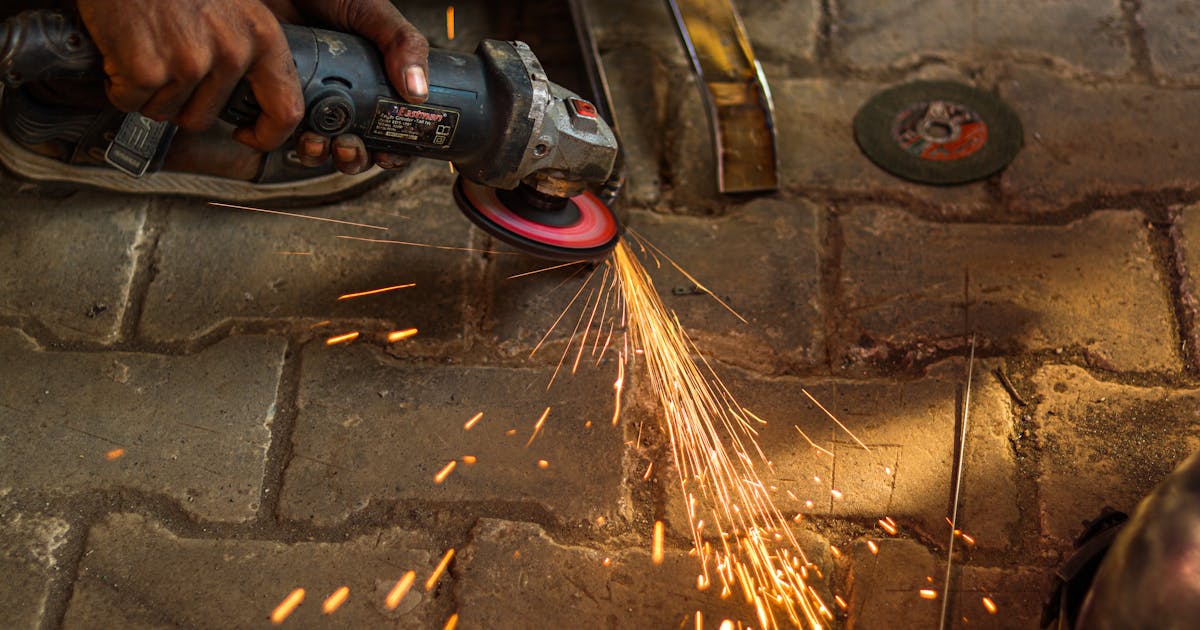

Heavy Stock Removal Starts with the Right Grinding Wheel
Grinding wheels are the backbone of stock removal operations in metal fabrication and machining. When you need to remove weld crowns, dress edges, sharpen tooling, or take down heavy burrs, the right grinding wheel — properly specified for the application, tool, and material — is what separates efficient production from wasted time and consumables.
Whitby Abrasives supplies two primary categories of grinding wheels to Canadian fabrication operations: depressed centre grinding wheels for angle grinders, and vitrified bench grinding wheels for bench and pedestal grinders. This guide covers both product categories in detail, explains the technical differences, and provides a clear selection framework for procurement teams.
Category 1: Depressed Centre Grinding Wheels (Type 27)
Depressed centre grinding wheels — also referred to as Type 27 grinding wheels — are designed for use on angle grinders. Unlike cutting wheels, which are used edge-on, depressed centre grinding wheels work on their face at a low working angle, making full face contact with the workpiece to deliver high material removal rates across a broad contact area.
These wheels are thicker and more aggressive than flap discs — typically 6 mm or more — and are the correct tool for applications requiring rapid, heavy stock removal where surface finish is a secondary concern.
Grain Options for Depressed Centre Wheels
- A — Aluminum Oxide: The standard grain for mild steel, carbon steel, and general ferrous grinding. Cost-effective and well-suited to production environments processing standard structural materials. Predictable wear rate and reliable cut performance across a broad range of applications.
- ZA — Zirconia Alumina: For higher throughput and longer wheel life. ZA grain self-sharpens as it wears, maintaining aggressiveness through the wheel's life. Preferred for structural steel, hard alloys, and any high-volume grinding operation where wheel changes reduce productivity.
- CE — Ceramic: For stainless steel and heat-sensitive alloys. Ceramic grain cuts cooler and harder than AO or ZA, and CE wheels in our line are iron-free and sulfur-free for contamination-sensitive applications.
Applications for Depressed Centre Grinding Wheels
- Weld crown removal: The most common angle grinder grinding task. Remove excess weld material flush with the parent material.
- Edge dressing: Clean up flame-cut, plasma-cut, or saw-cut edges to remove dross, burrs, and roughness.
- Bevel preparation: Grind bevels on plate and pipe edges prior to welding to the correct angle and profile.
- Heavy burr removal: Remove heavy casting burrs, machining remnants, or parting lines on large workpieces.
- Surface prep: Remove mill scale, rust, and surface contamination from stock prior to welding or coating.
Category 2: Vitrified Bench Grinding Wheels
Vitrified bench grinding wheels are designed for use on bench grinders and pedestal grinders — stationary power tools where the workpiece is presented to the wheel by hand. These wheels operate at lower surface speeds than angle grinder wheels and are built with a vitrified bond, which is a glass-ceramic matrix that holds abrasive grains in a rigid, porous structure.
What "Vitrified Bond" Means
The vitrified bond is produced by firing a mixture of abrasive grains and ceramic binders at high temperature, fusing them into a rigid, porous structure. The porosity is critical — it allows coolant and metal chips to escape the cutting zone, preventing wheel loading (where swarf clogs the wheel face and reduces cutting efficiency). Vitrified bonds are hard, chemically inert, and dimensionally stable, making them the standard bond type for precision bench grinding and tool sharpening applications.
Grit Options for Bench Grinding Wheels
Our vitrified bench grinding wheel range covers grits from 36 to 120:
- 36–46 grit: Coarse grinding for rapid material removal. Used for rough shaping, removing large amounts of material from tool edges, or general stock removal on the bench.
- 60–80 grit: Medium grinding for tool sharpening, edge dressing, and controlled dimensioning where a moderate surface finish is acceptable.
- 100–120 grit: Fine grinding for precision tool sharpening, final edge work, and applications requiring a clean, consistent finish.
Applications for Vitrified Bench Grinding Wheels
- Tool sharpening: Sharpen drill bits, chisels, lathe tools, and other cutting tools on the bench grinder. Consistent grit and bond hardness ensure repeatable results.
- Edge dressing: Dress the edges of hand tools, punches, and dies to restore cutting geometry.
- Dimensioning and shaping: Remove material from small parts or tooling to bring them to dimension without the setup time of machining.
- Burr and flash removal: Remove small burrs, flash lines, and parting lines from castings, forgings, and machined parts on the bench.
Wheel Dressing and Conditioning
Both depressed centre and bench grinding wheels benefit from regular dressing. Wheel dressing removes loaded (clogged) abrasive grains and glazed surfaces, exposing fresh cutting grain and restoring the wheel's cutting ability. For vitrified bench grinding wheels, a diamond dresser or star-wheel dresser is the standard tool; for depressed centre grinding wheels in production environments, a dressing stick can restore performance between jobs.
A dressed wheel cuts faster, generates less heat, and delivers a more consistent finish than a loaded or glazed wheel. Incorporating a regular dressing interval into your grinding process is one of the highest-return maintenance practices available.
Depressed Centre vs. Bench Grinding Wheel: Comparison
| Attribute | Depressed Centre (Type 27) | Vitrified Bench Grinding Wheel |
|---|---|---|
| Tool type | Angle grinder (portable) | Bench / pedestal grinder (stationary) |
| Primary use case | Weld removal, edge dressing, bevel prep | Tool sharpening, dimensioning, small-part work |
| Grain options | A, ZA, CE | A (aluminum oxide, standard) |
| Bond type | Resinoid (organic bond) | Vitrified (ceramic bond) |
| Workpiece mobility | Tool brought to workpiece | Workpiece brought to wheel |
| Grit range | Typically 16–36 (aggressive stock removal) | 36–120 (coarse to fine) |
Sourcing Grinding Wheels from Whitby Abrasives
Whitby Abrasives maintains stock across both grinding wheel categories for fast local pickup or shipping to Canadian fabrication operations. Our team can assist with product selection, volume pricing, and procurement account setup for ongoing supply relationships.
Browse Depressed Centre Grinding Wheels → Browse Vitrified Bench Grinding Wheels →
Shop Whitby Abrasives
Industrial-grade abrasives for Canadian fabricators — available for online order and local pickup in Whitby, Ontario.
Product Catalogues: Cutting Wheels • Grinding Wheels • Flap Discs • Sanding Belts • Sanding Discs • Strip Discs • Polishing Wheels • Rubber Deburring Wheels • Nylon Fibre Deburring Wheels • Mounted Flap Wheels • Vitrified Bench Grinding Wheels • Accessories
Email: info@whitbyabrasives.com • Address: 1450 Victoria Street East, Unit 2, Whitby, ON L1N 0N7 • About Us • Contact Us