
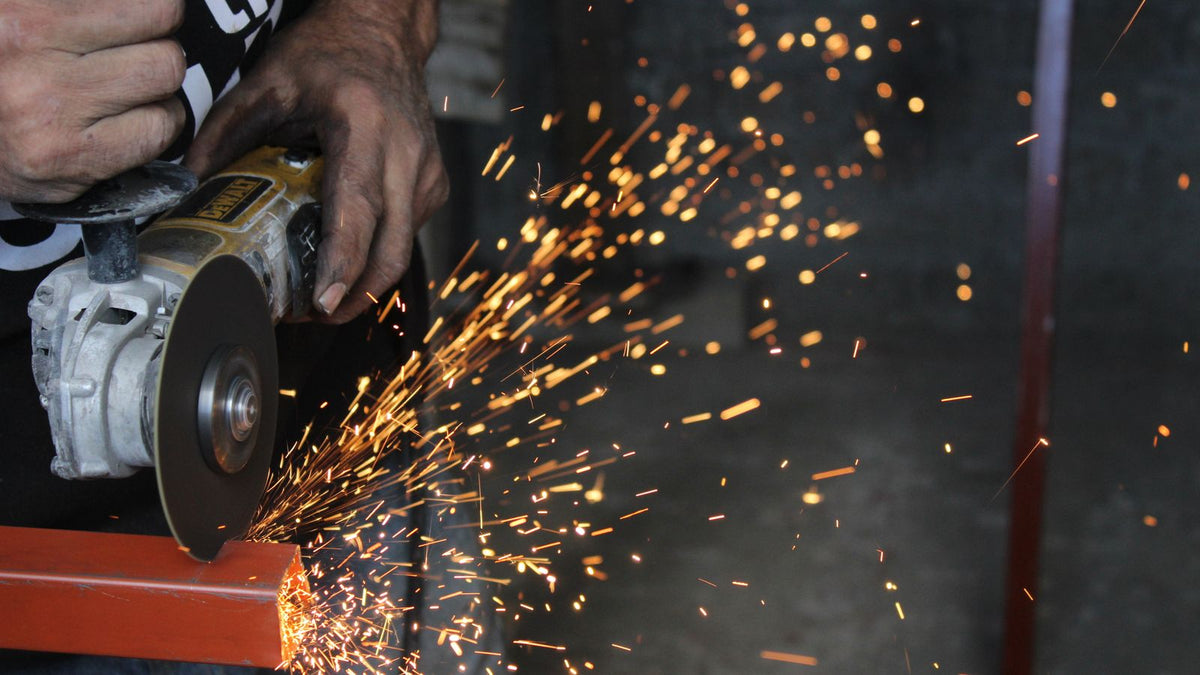
New market research on cutting and grinding discs points to a shift inside a category most shops treat as a commodity. Discs built with ceramic grain and diamond-bonded segments are taking share from standard aluminum oxide and zirconia products, with the category overall projected to grow at a 4.6% compound annual rate through 2035. For buyers, that shift changes what "the right disc" means for a given job, and it raises the cost of guessing wrong on quality.
The research breaks down why: fabrication shops, construction crews, and precision manufacturers are all asking more of their discs at once, faster cutting, longer life, and better behavior on harder materials. That combination favors engineered grain over the general-purpose products that have dominated the category for decades.
Why ceramic grain is gaining ground
Standard aluminum oxide grain wears by dulling, then fracturing in large, unpredictable chunks once the dull edge builds up enough heat and pressure. Ceramic grain is engineered to microfracture in a controlled way, so the disc exposes fresh cutting edges continuously as it wears instead of running dull and shedding material unevenly. The result is a disc that cuts faster, generates less heat, and holds its shape longer on hard-to-grind alloys, stainless, and hardened steel, the same materials showing up more often in aerospace, defense, and EV component work.
Where the demand is concentrated
Metal fabrication accounts for the largest share of disc demand, helped along by robotic and automated grinding cells that need consistent, predictable wear. Construction and masonry rank next, driven by infrastructure spending and wider use of diamond-segmented discs for concrete and block. Automotive, increasingly EV-driven, is pushing demand for discs that can handle precision cutting on aluminum and composite assemblies without tearing or clogging. Electronics and precision manufacturing is the smallest segment today but the fastest growing, as semiconductor fab buildouts call for ultra-thin discs with tight tolerances.
The same research flags two persistent headwinds for the category: raw material cost volatility in resin binders, aluminum oxide, and silicon carbide, and counterfeit or substandard discs that undercut legitimate products on price in cost-sensitive markets.
Reading the markings before you buy
A disc is only as good as its rating, and a faster-cutting ceramic wheel doesn't change the basic safety math. Wheels built to recognized standards such as ANSI B7.1 in North America carry mandatory markings: abrasive type, grain size, grade, bond, maximum operating speed in both RPM and metres per second, and dimensions. Resin and other organic-bonded wheels also carry a use-by date, typically three years from manufacture, because the bond can degrade with age and humidity and raise the risk of the wheel bursting in use.
None of that changes with the grain type. A ceramic disc still has to match the spindle speed of the tool it's mounted on, and it still needs to be inspected before use the same as any other wheel.
What this means for WA customers
- Match the grain to the job, not the catalog page. Ceramic and diamond-bonded discs earn their price premium on hard alloys, stainless, and high-volume automated cells. For general mild steel work, a standard aluminum oxide disc still does the job at a lower cost per cut.
- Check the markings every time, not just on new product lines. Confirm the maximum RPM on the disc matches or exceeds your tool's rated speed, and check the use-by date on resin-bonded wheels before they go on a grinder.
- Buy from a supplier who can tell you where a disc comes from. As premium formats take a larger share of the market, so does the incentive to pass off substandard discs as the real thing, particularly on price-sensitive imports.
- Budget for the mix, not just the unit price. A shop moving more work toward ceramic grain spends more per disc but should see that offset in fewer disc changes and less grinding time per part.
Browse WA's current cutting and grinding disc selection to compare grain types and formats against your shop's job mix.
Frequently asked questions
Q: What's the real difference between ceramic grain and standard aluminum oxide discs?
A: Aluminum oxide grain dulls and then breaks off in larger pieces once it builds up heat and pressure. Ceramic grain is engineered to fracture in smaller, more predictable pieces, continuously exposing sharp edges. That gives ceramic discs faster cutting speeds, longer service life, and better performance on hard or heat-sensitive alloys, usually at a higher price.
Q: How do I know if a cutting or grinding disc is safe to mount on my grinder?
A: Check that the disc's maximum operating speed, printed in RPM, meets or exceeds your tool's rated speed, confirm the wheel diameter and arbor size match the guard and spindle, and inspect the disc for cracks or damage before mounting. Resin-bonded discs also carry a use-by date; don't mount one past it.
Q: Are ceramic grain discs worth it for a smaller shop?
A: It depends on the material mix. Shops cutting mostly mild steel at moderate volume often don't see enough of a speed or life advantage to offset the higher unit cost. Shops working stainless, hardened steel, or high-volume automated cells tend to recover the premium quickly through fewer disc changes and faster cycle times.