
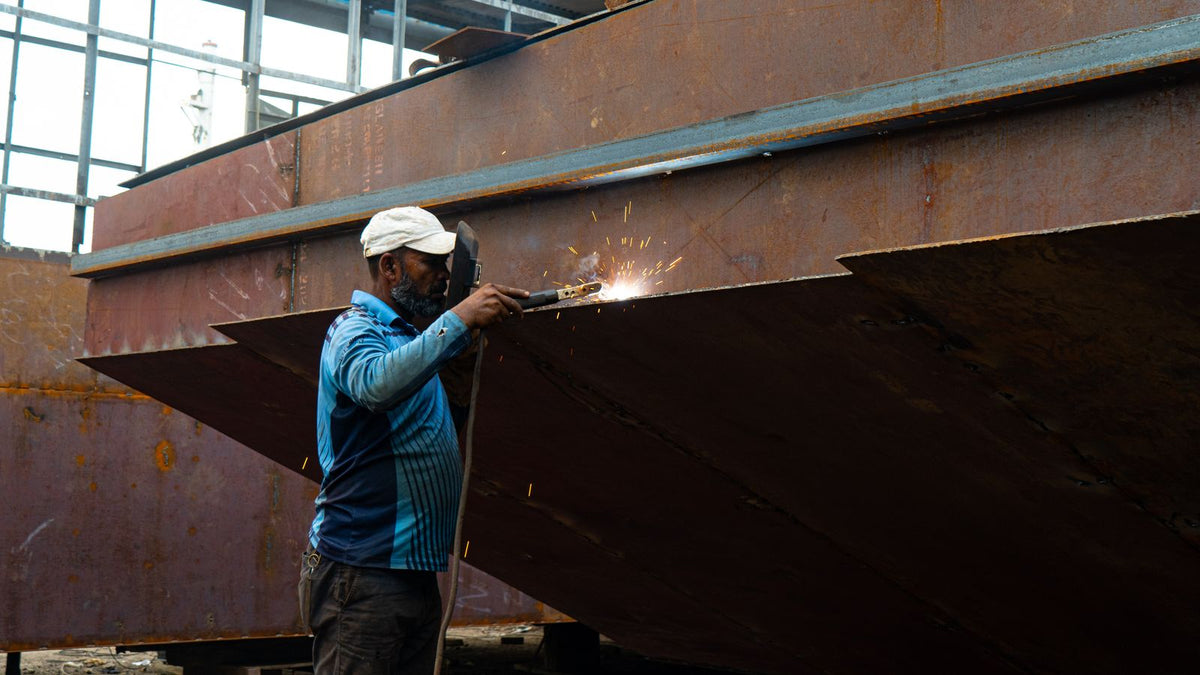
Canada's shipbuilding industry landed its biggest contract in years on August 24, 2026, when the federal government confirmed an $11.3 billion deal with Chantier Davie Canada Inc. to build six new Polar Class 3 icebreakers for the Canadian Coast Guard. It is the largest shipbuilding contract in Quebec's history, and it comes on top of a training and workforce push already underway at shipyards on both coasts.
For Canadian metal fabrication shops, this matters beyond the shipyards themselves. Building a steel-hulled icebreaker means cutting, beveling, and grinding thousands of tonnes of plate steel, then grinding every weld smooth before coating. That work runs through cutting discs, grinding wheels, flap discs, and wire brushes by the pallet-load, and it ripples out to every subcontractor feeding the build.
A decade-defining contract for Davie
The icebreakers will be built at Davie's shipyard in Levis, Quebec, with construction on the first vessel beginning in 2027 and deliveries running through the 2030s. The federal government says the project will create nearly 5,000 jobs during construction and contribute close to $650 million a year to Canada's GDP. The contract also carries a Buy Canadian Policy commitment that extends opportunity beyond Davie's own payroll to the steel producers, fabricators, and consumables suppliers feeding a build of this size.
Shipyards are already investing in the workforce to build it
The labour side of this buildout is moving in parallel. On August 4, 2026, Irving Shipbuilding announced $3.2 million in funding for Nova Scotia Community College's Akerley Campus, adding 20 new welding booths and renaming two upgraded spaces the Irving Shipbuilding Welding Shop and the Irving Shipbuilding Metal Fabrication Shop. On the other side of the country, Ontario Shipyards signed agreements earlier this year to expand large-scale shipbuilding in Hamilton, including a training partnership with Mohawk College covering welding, millwright, and marine mechanics. Shipyards are building this training capacity because the order books, led by the Davie contract, finally justify it.
What this means for WA customers
- Heavier steel work means heavier-duty consumables. Plate steel in the thicknesses used for icebreaker hulls calls for high-stock-removal grinding wheels and cutting discs built for continuous duty, not light-gauge sheet work.
- Weld prep and finishing volume rises with every new welder on the floor. A shipyard build runs through wire brushes, flap discs, and grinding wheels for weld cleanup at a scale that dwarfs typical job-shop consumption, and that demand extends to subcontractors supplying brackets, fittings, and structural components.
- Shops bidding into this supply chain should plan consumables budgets around sustained, multi-year volume rather than one-off orders, since deliveries run into the 2030s.
- Buy Canadian sourcing preferences apply to more than steel. Stocking abrasives from a Canadian supplier keeps a shop's purchasing aligned with the same sourcing priorities its shipbuilding customers work under.
Whitby Abrasives stocks grinding wheels, cutting discs, flap discs, and wire brushes in Canada, ready for shops scaling up for heavier fabrication work. Browse the full catalog of grinding wheels, cutting discs, flap discs, and wire brushes to see current stock.
Frequently asked questions
What abrasives see the most demand from shipbuilding work?
Heavy-duty cutting discs and grinding wheels for plate steel, plus flap discs and wire brushes for weld cleanup and surface prep before coating, are the consumables that see the heaviest use on a shipyard floor.
Does the Davie icebreaker contract affect shops outside Quebec?
Yes. The contract carries a Buy Canadian Policy commitment that extends sourcing opportunities to suppliers and fabricators across the country, and separate shipbuilding investment is also underway in Nova Scotia and Ontario.
When does construction on the icebreakers begin?
Construction on the first vessel starts in 2027, with all six ships delivered through the 2030s, according to the federal government's August 24, 2026 announcement.