
Meta broke ground in July 2026 on a C$13 billion, 1-gigawatt data centre in Sturgeon County, Alberta, its first in Canada. Bell Canada is building a $1.7 billion facility in Sherwood, Saskatchewan, that it calls the largest purpose-built data centre in the country. Both projects sit inside a broader North American build-out that, according to ConstructConnect's tracking, pushed U.S. data centre construction starts to $84.1 billion through July 2026, nearly three times the pace of a year earlier.
None of that spending is really about servers. Before a single rack goes in, these sites need structural steel: wide-flange beams, columns, joists, and metal decking, all of it cut, welded, and ground on site or at a fabrication shop nearby. For Canadian metalworkers, that steel demand is the part of the story that shows up in consumable orders.
The scale of the build-out
Alberta has become a focal point. The number of data centre projects seeking grid connection in the province grew from two in January 2024 to more than 30 by mid-2025, with combined proposed capacity reaching 21 gigawatts. Meta's Sturgeon County site alone is expected to support more than 3,000 construction workers at peak activity. Bell's Saskatchewan facility started construction this spring, with its first data halls due online in early 2027.
Supporting infrastructure is scaling alongside the buildings themselves. Power infrastructure construction in the U.S. rose from roughly $9 billion in 2021 to $37 billion in 2025, and 2026 is tracking a few percentage points ahead of that pace. Every substation, transformer yard, and transmission structure in that spending adds its own steel scope, on top of the data halls.
Why this matters for cutting and grinding wheel demand
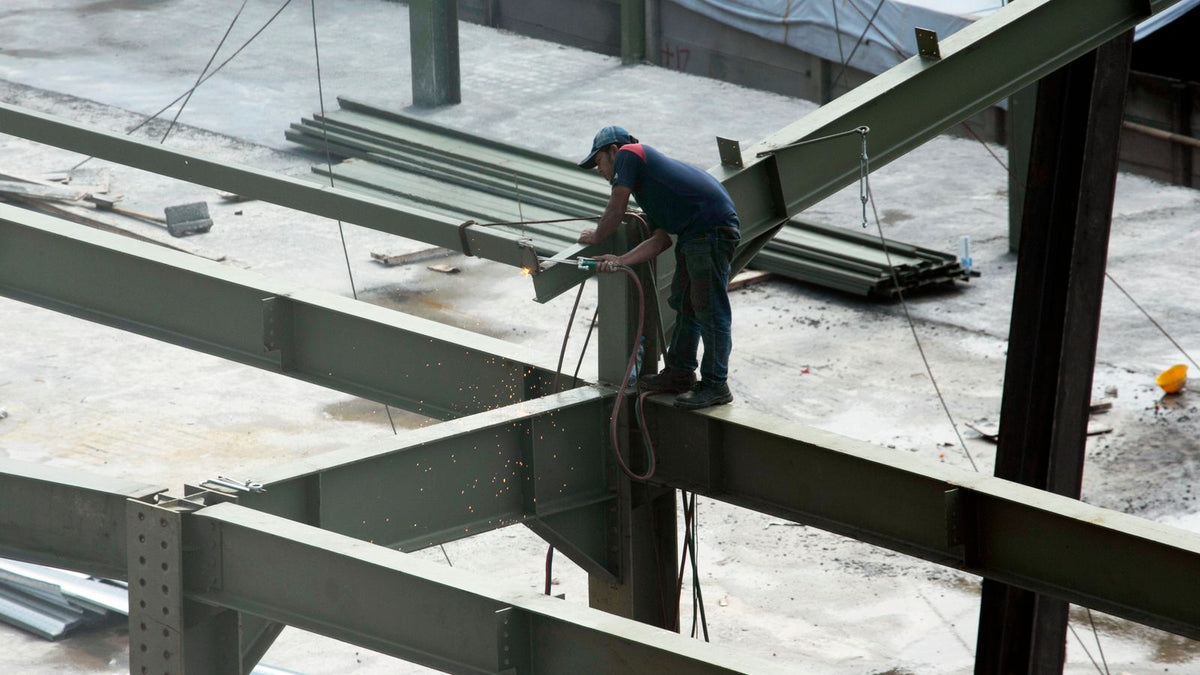
Structural steel for a large facility does not arrive ready to bolt together. Beams get cut to length, copes and notches get ground clean, weld seams get dressed, and mill scale and coatings get stripped before paint or galvanizing. Each of those steps runs through cutting discs, grinding wheels, and flap discs, and a single large-scale project can consume them at a volume that dwarfs typical shop work.
Fabricators bidding on this kind of work, or supplying steel to contractors who are, should expect consumable draw to scale with tonnage rather than with job count. A handful of large structural packages can move more wheels and discs through a shop in a month than a full slate of smaller jobs would in a normal quarter.
What this means for WA customers
If your shop is bidding on structural steel packages tied to data centre, substation, or power infrastructure work, a few practical steps are worth taking now:
- Size your consumable order against tonnage and joint count for the job, not against your average monthly spend.
- Stock a deeper buffer of your core cutting disc and grinding wheel sizes before a large structural package starts, since site schedules rarely leave room for a slow reorder.
- Standardize grinding wheel and flap disc grit across a crew working the same weld-dressing spec, so quality stays consistent across multiple welders on a large job.
- Talk to your supplier early about volume pricing if a project is large enough to shift your monthly consumable spend meaningfully.
Browse Whitby Abrasives' full catalog of cutting, grinding, and finishing abrasives to stock up ahead of your next structural steel job.
Frequently asked questions
Does data centre construction really affect abrasives demand? Indirectly but significantly. The buildings themselves are structural steel projects, and every beam, column, and weld seam on those projects needs cutting, grinding, and finishing work before it goes up.
Is this trend specific to Alberta and Saskatchewan? Those two provinces have the largest announced projects right now, but data centre and supporting power infrastructure construction is expanding across multiple regions in both Canada and the U.S.
How should a shop plan consumable inventory around a large structural job? Base the order on tonnage and joint count for that specific job rather than historical monthly averages, and build in extra lead time for core sizes given how tight steel and industrial supply chains have been.