
Precision Cutting Starts with the Right Wheel
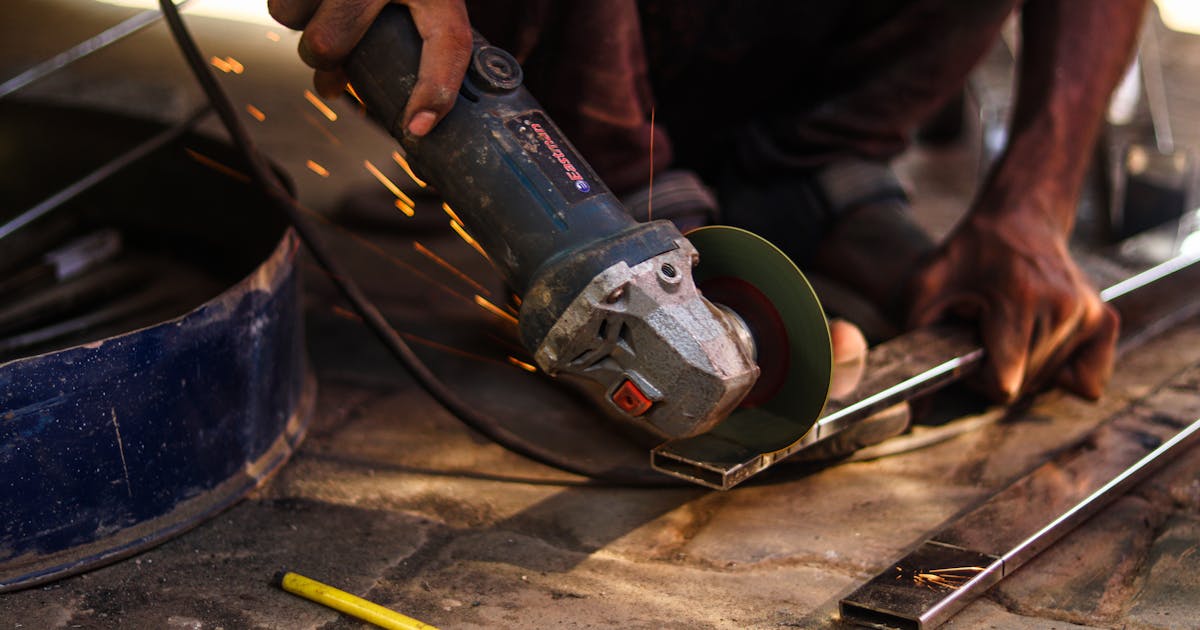
In metal fabrication, every cut matters. Whether you're processing structural steel on a job site, cutting stainless tubing in a welding shop, or slicing hardened alloys in a manufacturing plant, the quality of your cutting wheel directly affects cut speed, surface finish, kerf width, and wheel longevity. At Whitby Abrasives, we supply Canadian fabricators and procurement teams with a full range of industrial-grade cutting wheels engineered for consistent, controlled performance across a broad spectrum of materials and applications.
This guide covers everything you need to know about our cutting wheel product line — from grain types and thickness options to diameter sizing and material-specific recommendations — so your procurement team can make informed, cost-effective decisions.
Understanding Our Cutting Wheel Product Line
Whitby Abrasives offers cutting wheels in a variety of configurations to suit angle grinders and straight grinders used throughout Canadian fabrication operations. Our wheels are manufactured to meet or exceed Type 1 (flat) and Type 41 reinforced cutting disc standards, and all carry the appropriate RPM ratings for safe use at rated grinder speeds.
Our catalogue covers three primary abrasive grain types, two thickness categories, and three standard diameter sizes — giving procurement managers the flexibility to specify the exact wheel for each application without overpaying for excess capability or underspecifying and sacrificing wheel life.
Abrasive Grain Options
A — Aluminum Oxide (Standard)
Aluminum oxide is the workhorse grain for general-purpose ferrous cutting. It performs well on mild steel, carbon steel, and low-alloy structural steel. A-grain wheels offer a predictable cut rate, consistent wheel wear, and a lower cost per wheel — making them the preferred choice for high-volume shops cutting standard structural sections, rebar, angle iron, and flat bar.
If your operation processes primarily mild or carbon steel and cost-per-cut is the primary metric, A-grain cutting wheels are the economical baseline choice.
ZA — Zirconia Alumina (Premium Performance)
Zirconia alumina grain is a significant step up in cutting performance. ZA wheels are self-sharpening — as the grain dulls, micro-fractures expose fresh cutting edges, maintaining an aggressive cut rate throughout the wheel's life. This makes ZA the preferred grain for structural steel (I-beams, HSS, channels), high-carbon steel, and any application where throughput and wheel life are the primary considerations.
In high-volume cutting environments, ZA wheels often deliver a lower cost-per-cut than standard A-grain wheels, despite a higher upfront price per disc. For fabrication shops running multiple grinders on extended shifts, the productivity gain is measurable.
CE — Ceramic Grain (Specialty Applications)
Ceramic abrasive grain is engineered for the most demanding cutting applications: stainless steel, hardened alloys, titanium, and other heat-sensitive or work-hardening materials. Ceramic grain cuts cooler than aluminum oxide or zirconia, which matters significantly when cutting stainless — excess heat causes chromium carbide precipitation and can compromise the corrosion resistance of the cut zone.
CE-grain cutting wheels are also iron-free and sulfur-free, which is a code requirement in many stainless and food-grade fabrication environments. If your shop handles duplex stainless, 316L, or specialty nickel alloys, CE-grain wheels belong in your standard procurement spec.
Wheel Thickness: Thin-Kerf vs. Standard
Thin-Kerf (1.0–1.6 mm)
Thin-kerf cutting wheels remove less material per cut, which translates directly into reduced heat input, lower grinder motor load, and less material waste — particularly relevant when cutting precision stock or expensive alloys. They are faster through the cut and produce a cleaner edge, but are more susceptible to lateral flex and breakage if used improperly (off-axis grinding, side pressure).
Thin-kerf wheels are best suited for straight, controlled cuts in tubing, thin-wall sections, sheet metal, and precision bar stock where edge quality matters.
Standard Thickness (2.0–3.0 mm)
Standard-thickness wheels are more robust and better suited to heavier sections, structural profiles, and applications where the operator cannot always maintain perfectly consistent cutting geometry. They are more forgiving of slight angular variations and handle harder materials with greater durability. For on-site cutting, large-diameter sections, or operators who alternate between cutting and light grinding, a standard-thickness wheel is the safer specification.
Diameter Range
Whitby Abrasives cutting wheels are available in the three most common sizes used in Canadian fabrication:
- 115 mm (4.5"): For compact angle grinders; ideal for tight-access cuts, light-duty fabrication, and mobile work.
- 125 mm (5"): A versatile mid-size that balances reach and control; suitable for most shop and site cutting tasks.
- 230 mm (9"): For large angle grinders; designed for heavy structural sections, large-diameter pipe, and high-throughput cutting stations.
Material Selection Guide
The following table provides our recommended grain and thickness specification for common materials encountered in Canadian fabrication operations:
| Material | Recommended Grain | Recommended Thickness |
|---|---|---|
| Mild steel / carbon steel | A (Aluminum Oxide) | 1.6 mm or 2.5 mm |
| Structural steel (I-beam, HSS, channel) | ZA (Zirconia Alumina) | 2.5–3.0 mm |
| Stainless steel (304, 316L) | CE (Ceramic) — iron-free | 1.0–1.6 mm |
| Hardened alloys / tool steel | CE (Ceramic) | 1.6–2.5 mm |
| High-carbon steel / high-alloy steel | ZA (Zirconia Alumina) | 2.0–2.5 mm |
| Thin-wall tubing / precision stock | A or CE depending on material | 1.0–1.6 mm (thin-kerf) |
Safety Note
Cutting wheels are Class A abrasive products and must be handled, stored, inspected, and operated in compliance with applicable safety standards. Always verify that the wheel's rated maximum RPM meets or exceeds the grinder's no-load speed before mounting. Inspect every wheel for cracks, chips, or damage before use. Never use a cutting wheel for side grinding.
For a complete overview of abrasive safety requirements including speed ratings, ring test procedures, storage, and PPE requirements, refer to our dedicated safety guide: Abrasive Safety and Compliance: Speed Ratings, Inspection, Storage, and PPE Requirements.
Why Source Cutting Wheels from Whitby Abrasives?
Whitby Abrasives is a Canadian industrial abrasives supplier based in Whitby, Ontario, serving fabrication shops, manufacturing plants, and procurement teams across Canada. We maintain stock across our full cutting wheel range for fast local pickup or shipping, offer volume pricing for ongoing procurement accounts, and provide technical guidance to help your team specify the right product the first time.
Our product line is built for industrial use — not retail-grade consumer quality. Every cutting wheel in our catalogue is sourced and quality-verified to perform consistently under the demands of production fabrication environments.
Browse the Cutting Wheel Catalogue →
Shop Whitby Abrasives
Industrial-grade abrasives for Canadian fabricators — available for online order and local pickup in Whitby, Ontario.
Product Catalogues: Cutting Wheels • Grinding Wheels • Flap Discs • Sanding Belts • Sanding Discs • Strip Discs • Polishing Wheels • Rubber Deburring Wheels • Nylon Fibre Deburring Wheels • Mounted Flap Wheels • Vitrified Bench Grinding Wheels • Accessories
Email: info@whitbyabrasives.com • Address: 1450 Victoria Street East, Unit 2, Whitby, ON L1N 0N7 • About Us • Contact Us