
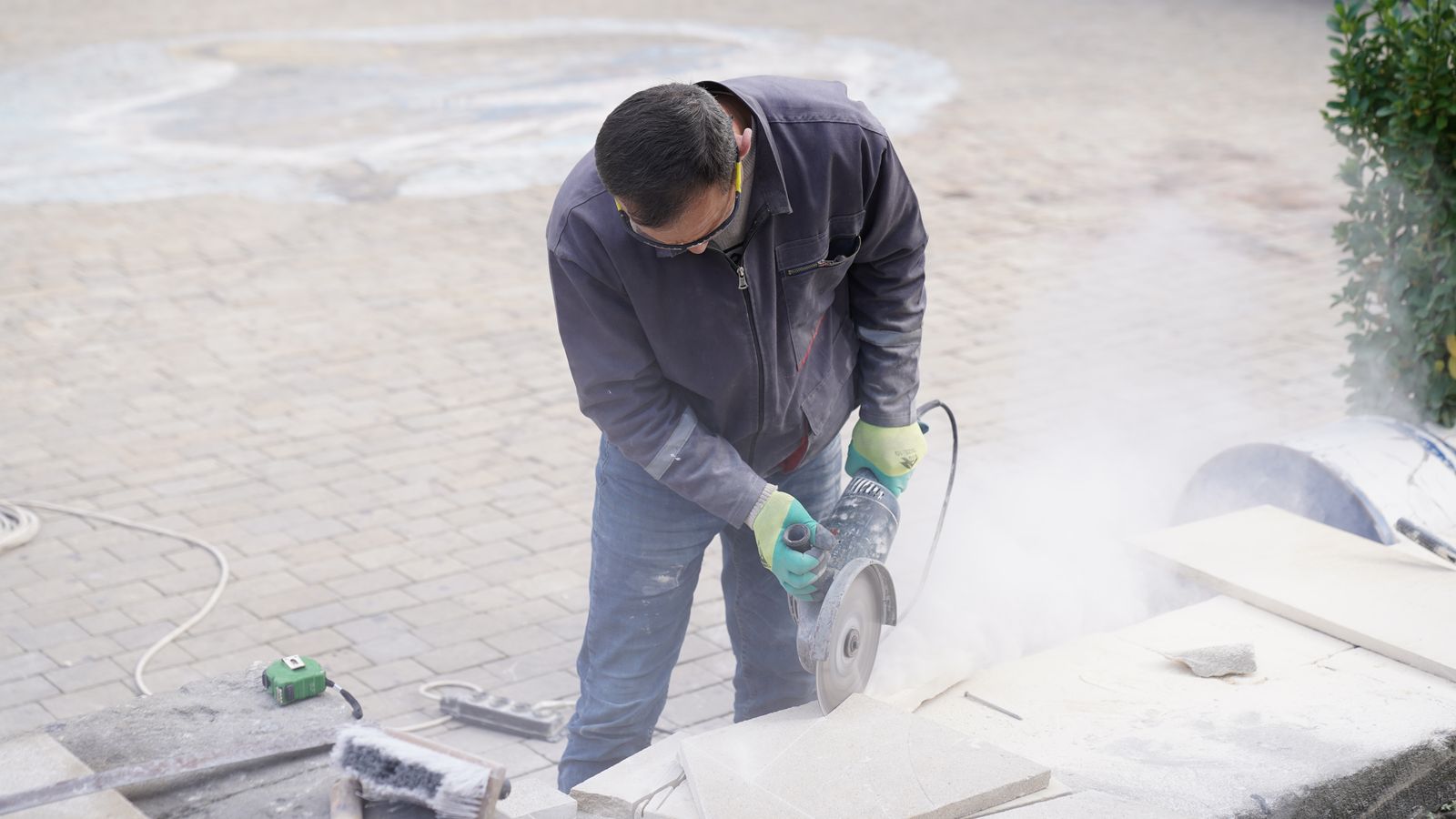
Grinding welds, cutting concrete anchors, or blending steel with a flap disc all throw off fine dust — and OSHA has made that dust one of its top enforcement priorities in 2026. Citations for respirable crystalline silica violations in construction rose 22% in fiscal year 2025 over the prior year, and the agency has been backing that trend with much larger penalties in the months since.
For Canadian shops working across the border, or simply watching where U.S. regulatory attention goes next, the shift is worth understanding. Silica exposure rules aren't new, but 2026 enforcement shows regulators treating dust from everyday grinding and cutting operations with the same seriousness as a fall-protection or machine-guarding violation.
What's driving the enforcement push
The U.S. standard covers work that "creates very small dust particles" from cutting, sawing, grinding, drilling, and crushing concrete, brick, block, mortar, and similar materials — activities that overlap directly with angle grinders, cut-off wheels, and masonry saws on a typical job site. Average citation values have climbed as well, rising from roughly $31,200 in fiscal 2023 to about $42,300 in fiscal 2025, with willful violations averaging closer to $148,000.
One case illustrates the scale inspectors are now pursuing: in March 2026, a Phoenix-area concrete contractor was fined roughly $487,000 after inspectors found a dozen workers operating masonry saws with no dust controls, no respiratory protection, and no exposure monitoring in place. Since the original Table 1 compliance deadline in 2018, penalties issued to construction employers for silica violations have topped $78 million.
Where the violations keep showing up
The recurring pattern in enforcement cases is straightforward: handheld grinders run without shrouds or vacuum attachments, cut-off saws used dry instead of with water suppression, and jackhammers or chipping tools operated without water at the point of impact. None of these are exotic failures — they're the shortcuts that happen when a crew is behind schedule or dust control gear isn't on hand.
The compliance path most contractors use, OSHA's "Table 1," sets out engineering controls (water delivery, shrouds, vacuum dust collection), required work practices, respiratory protection for indoor or enclosed-space grinding, and training and exposure-plan documentation. Employers who follow Table 1 specifications for a listed task avoid the added burden of air monitoring — but only if the control equipment specified for that tool is actually in use.
What this means for WA customers
Canadian shops aren't bound by U.S. OSHA rules, but the direction of travel matters for two reasons. First, many Canadian provinces have their own — and in some cases stricter — respirable silica exposure limits under provincial OH&S regulation, and enforcement patterns south of the border often precede tighter attention here. Second, any shop doing cross-border work, servicing U.S. clients, or supplying crews that travel into the U.S. needs its dust-control practices to hold up under a Table 1-style inspection.
- Match the wheel or disc to the job and check that your grinder or saw is fitted with the shroud, vacuum attachment, or water delivery it was designed for — dust control starts with the tool setup, not just the abrasive.
- Keep a running stock of cut-off wheels, grinding wheels, and flap discs rated for the material and RPM in use, so crews aren't tempted to make an unsuited wheel work dry or unguarded.
- Build respirator fit-testing and basic silica-awareness training into onboarding, even for shops that consider themselves low-exposure — enforcement data shows violations concentrate in ordinary grinding and cutting tasks, not unusual ones.
Whether you're outfitting a fabrication shop or a concrete crew, having the right cutting and grinding wheels on hand — matched to the material, guard, and dust-control setup you're running — is the starting point for staying ahead of these rules. Browse our full abrasives catalog to stock up.
Frequently asked questions
Does Canada have a silica dust rule similar to OSHA's?
Silica exposure in Canada is regulated provincially rather than through a single federal standard, and several provinces set occupational exposure limits for respirable crystalline silica under their OH&S legislation. Shops should check the specific limits and control requirements that apply in their province.
What's the simplest way to reduce silica dust from grinding and cutting?
Using tools fitted with the shroud, vacuum dust collection, or water delivery system they were designed for is the most direct control, paired with using the correct wheel or disc for the material and machine speed.
Are metal grinding and cutting operations covered by silica rules, or just concrete work?
The core enforcement activity has centered on concrete, brick, block, and similar masonry materials, but shops that cut or grind mixed materials — including metal fabrication alongside concrete anchor or surface prep work — should apply the same dust-control discipline across all cutting and grinding tasks.