
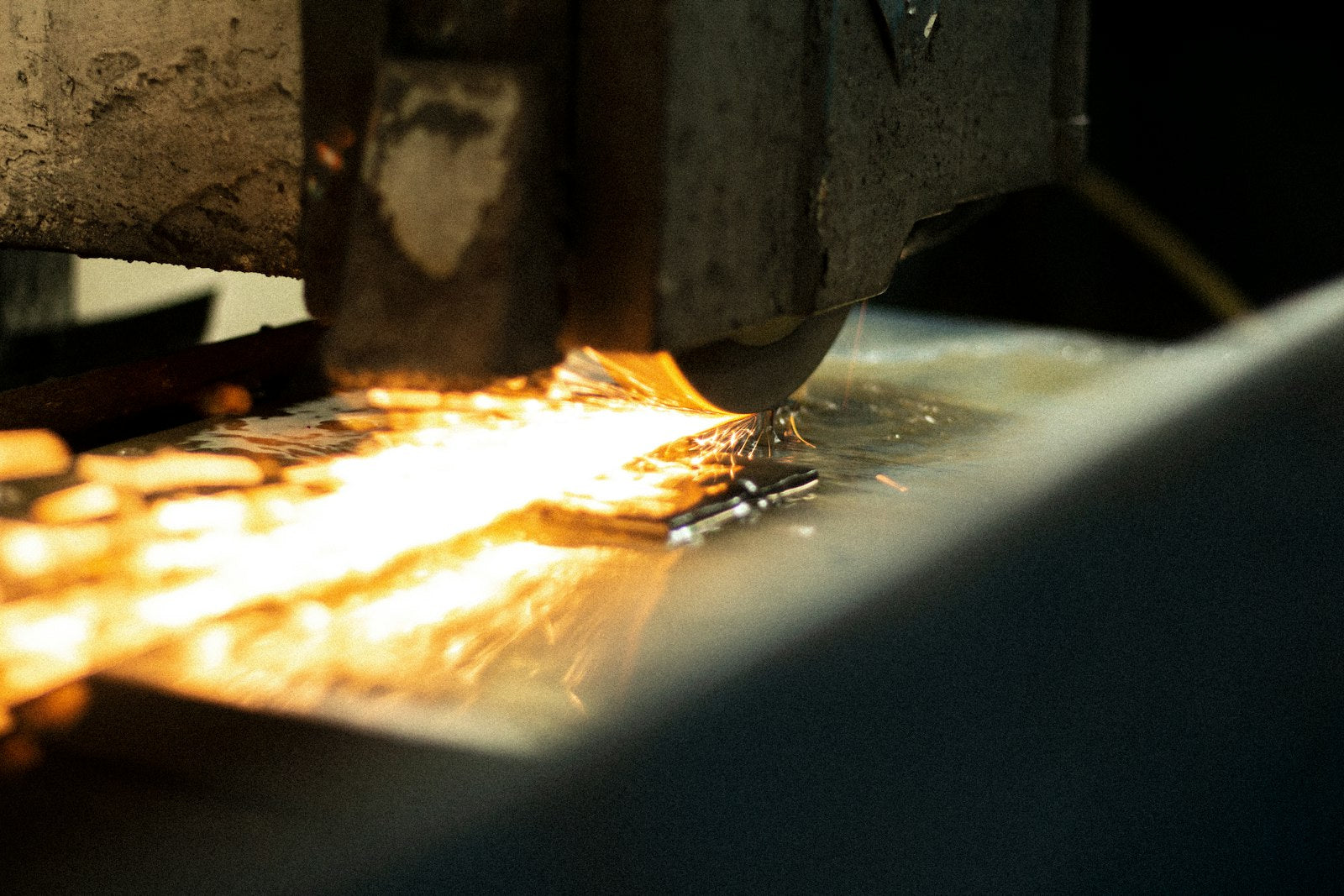
The abrasives market is having a strong year. Industry analysts put global abrasives demand at roughly USD 58 billion for 2026, with grinding wheels and cutting discs among the fastest-moving categories as steel output, construction, automotive work, and electric-vehicle manufacturing all pull harder on the supply chain. But alongside that growth is a quieter shift that matters just as much on the shop floor: buyers and regulators are paying closer attention to whether the disc on the grinder is actually tested and certified.
For tradespeople and fabricators in Canada, that shift is worth understanding now. A cutting disc or grinding wheel is one of the few consumables that spins at tens of thousands of RPM inches from your hands and face. When demand rises and cheap, uncertified product floods in, the gap between a properly tested wheel and a bargain-bin one becomes a safety issue, not just a quality one.
Demand is up — and so is the pressure on quality
Forecasts for 2026 point to continued mid-single-digit growth across bonded and coated abrasives, with grinding wheels expanding at around 5% annually and cutting discs growing even faster. Global crude steel production is expected to top 1.9 billion tonnes, which keeps demand high for wheels used in everything from billet conditioning to everyday weld cleanup. More volume means more suppliers, more import options, and a wider spread in quality. The challenge for a working shop is telling the difference before the wheel is on the machine.
Certification is moving from "nice to have" to baseline
This is where testing standards earn their keep. Bonded abrasives sold into North American and European markets are typically built to recognized safety standards — ANSI/UAMA B7.1 in North America and EN 12413 in Europe — which set requirements for wheel strength, balance, burst speed, and clear marking. Independent schemes such as oSa certification go a step further, verifying that a manufacturer's products are tested and labelled to those standards. Market watchers note that tightening occupational health and safety expectations through 2024–2026 are steering more buyers toward tested, marked product, and away from unlabelled discs of unknown origin.
The practical signal for buyers is the marking on the wheel itself: a legible maximum operating speed, dimensions, abrasive specification, and an expiry date for bonded wheels. If those details are missing or unreadable, that is a red flag regardless of how attractive the price looks.
Compliance is a system, not a sticker
One point safety specialists keep stressing is that buying a certified wheel is necessary but not sufficient. A certificate on the box does not make a job safe on its own. Real compliance is a system: choosing the right wheel for the material and machine, storing discs flat and dry so they don't absorb moisture or warp, mounting them with the correct flanges, keeping guards in place, inspecting for cracks before each use, and respecting the expiry date and maximum RPM. In North America, OSHA's abrasive wheel rules and their Canadian provincial equivalents measure that whole system — not just what arrived in the carton.
For shop owners, the takeaway is that certified product lowers your risk only when it's paired with good handling habits. The wheel and the workflow have to be sound together.
What this means for WA customers
If you're buying abrasives in Canada in 2026, a few habits will keep you on the right side of this trend. Check the marking on every cutting disc and grinding wheel for a clear max RPM, size, specification, and — for bonded wheels — an in-date expiry. Match the wheel to the job rather than reaching for whatever's closest: a thin cutting disc for cutting, a depressed-centre wheel for grinding, and a flap disc for blending and finishing. Store your stock somewhere dry and undamaged, and rotate older bonded stock first. And when a price looks too good to be true on an unmarked import, treat that as a warning rather than a deal.
At Whitby Abrasives, our cutting discs, grinding wheels, flap discs, and sanding belts are selected to meet the standards Canadian shops rely on, so you can focus on the work instead of second-guessing the consumable. As demand and scrutiny both climb this year, that peace of mind is worth more than a few cents saved per disc.
Want abrasives you can trust on every job? Browse the full Whitby Abrasives catalog to find the right disc, wheel, or belt for your next project.