
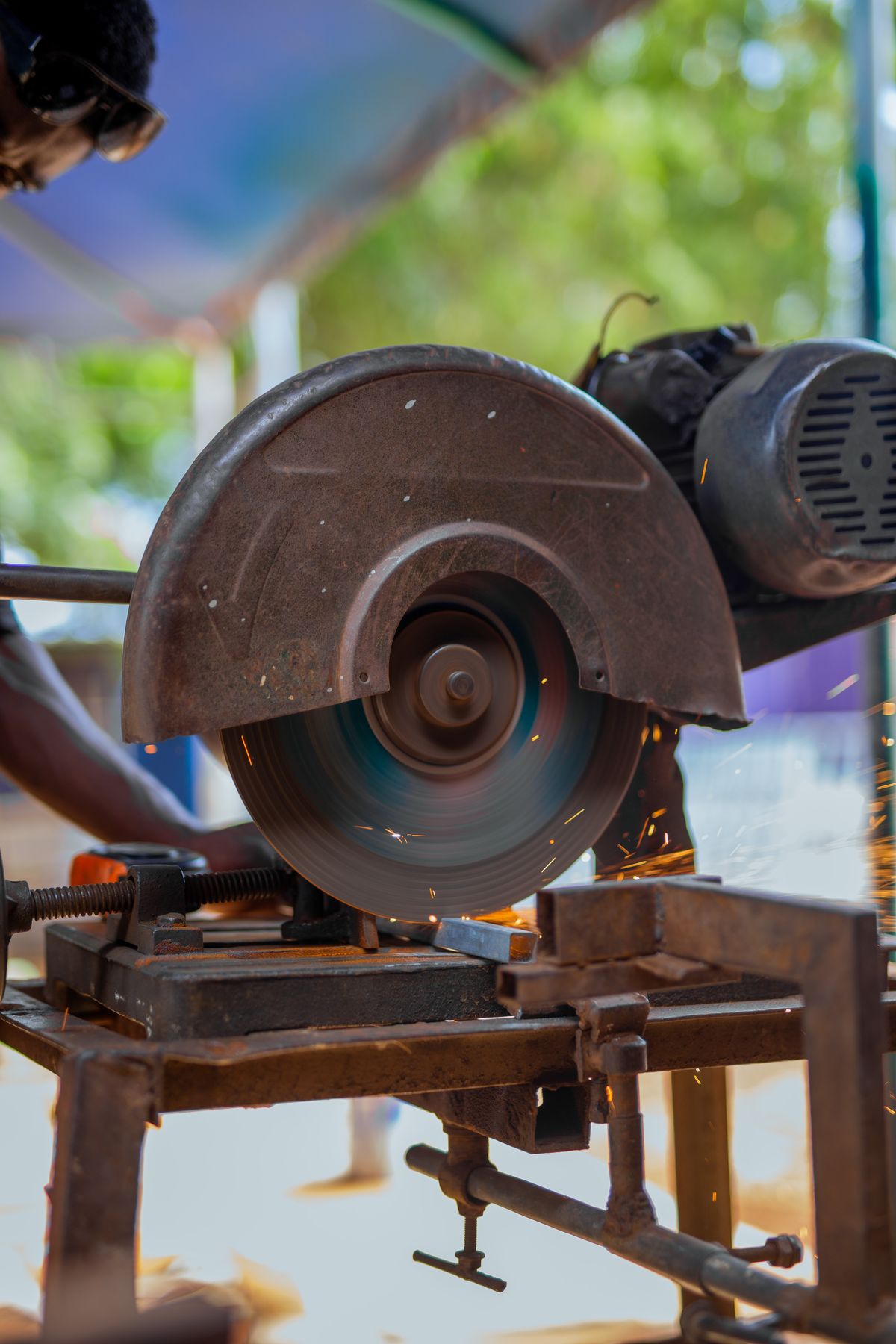
Réponse rapide : Le marché canadien des abrasifs représente une consommation d’environ CAD $900 millions à $1.1 milliard et affiche une croissance annuelle de l’ordre de quelques pour cent, dans le bas ou le milieu de cette fourchette. Les produits appliqués (disques à lamelles, bandes abrasives et disques en fibre) en constituent le segment le plus important et celui qui croît le plus rapidement, tandis que le grain céramique passe progressivement du haut de gamme au marché courant. Les principales forces qui déterminent les achats des fabricants sont les fluctuations du prix des matières premières, les tarifs transfrontaliers et le net virage vers l’achat d’abrasifs en ligne. Whitby Abrasives est un fournisseur établi à Whitby, en Ontario, qui stocke localement des abrasifs de qualité industrielle afin de protéger les acheteurs canadiens contre cette volatilité.
Si vous gérez les achats d’un atelier de fabrication, d’un atelier de soudage ou d’une équipe d’entretien, de réparation et d’exploitation, le marché canadien des abrasifs vous semble probablement moins prévisible qu’il y a quelques années. Les soumissions changent d’un mois à l’autre, les délais s’allongent et le disque qui convenait parfaitement l’an dernier coûte soudainement deux dollars de plus — ou est en rupture de stock. Cet article rassemble les tendances de l’industrie des abrasifs qui changent réellement ce qui arrive sur vos tablettes; il s’adresse à l’acheteur plutôt qu’à l’analyste. Nous abordons la taille et l’orientation du marché, l’adoption du grain céramique, les pressions exercées par la chaîne d’approvisionnement et les tarifs, le coût des matières premières et le virage vers l’achat d’abrasifs en ligne au Canada.
Quelle est la taille du marché canadien des abrasifs — et quelle direction prend-il?
Les estimations publiées pour le Canada varient énormément parce que les entreprises définissent le marché de différentes façons : certaines comptent seulement la production nationale, d’autres la consommation totale, importations comprises, et quelques-unes incluent les grains libres et les médias de sablage. Après rapprochement de ces sources, l’estimation la plus défendable de la consommation canadienne totale d’abrasifs — tous types de produits et tous canaux confondus — se situe dans une fourchette d’environ CAD $900 millions à $1.1 milliard, avec une croissance d’environ 4–5% par année. (Les chiffres généraux d’études de marché atteignant USD $2–3 milliards semblent couvrir un périmètre trop vaste et devraient être considérés avec prudence.)
Deux réalités structurelles importent aux acheteurs. Premièrement, le Canada est un importateur net d’abrasifs finis — les données gouvernementales sur le commerce montrent que les importations dépassent largement les exportations —, de sorte que la plupart des produits utilisés dans les ateliers canadiens sont importés plutôt que fabriqués ici. Deuxièmement, la demande est fortement concentrée en Ontario. La province regroupe environ 42% de la main-d’œuvre canadienne du secteur de la fabrication de produits métalliques, et le corridor qui traverse la région du Grand Toronto et la région de Durham présente la plus forte concentration d’ateliers de fabrication, de soudage et d’entretien, de réparation et d’exploitation au pays. Voilà le contexte pratique de toute discussion sur le marché canadien des abrasifs : un marché en croissance constante, alimenté par les importations et dont le centre de gravité se trouve dans le sud de l’Ontario.
| Vue du marché | Taille approximative | Orientation |
|---|---|---|
| Consommation canadienne totale (données rapprochées, tous types) | CAD $900M–$1.1B | Croissance annuelle de ~4–5% |
| Abrasifs agglomérés au Canada (tronçonnage/meulage) | ~USD $321M (2024) | Croissance annuelle de ~4.6% |
| Abrasifs appliqués (lamelles/ponçage/fibre) | Plus grand segment du Canada selon les revenus | Croissance la plus rapide |
| Amérique du Nord (outils abrasifs finis) | ~USD $4.0–4.5B | Croissance annuelle de ~5% (scénario de référence) |
Adoption du grain céramique : le haut de gamme se généralise
Le changement le plus important, au niveau des produits, parmi les tendances de l’industrie des abrasifs est le passage des grains de base aux grains techniques. Pendant des décennies, l’abrasif de prédilection a été l’oxyde d’aluminium brun fondu; aujourd’hui, la catégorie qui connaît la croissance la plus rapide est celle du grain céramique profilé avec précision, dont les cristaux abrasifs sont profilés et frittés afin de se fracturer de manière contrôlée et auto-affûtante. Il en résulte une coupe plus froide, moins de brûlure de la pièce à travailler, un enlèvement de matière plus rapide et une durée de vie accrue du disque sur les matériaux durs.
Pour un acheteur, la logique pertinente est celle du coût par pièce, et non du coût par disque. Un disque à lamelles en céramique ou un disque en fibre coûte plus cher à l’achat, mais sur l’acier inoxydable, le titane ou l’acier trempé, il peut durer et couper beaucoup plus qu’un disque classique en oxyde d’aluminium — ce qui signifie moins de changements de disque, moins de fatigue pour l’opérateur et une dépense totale inférieure par pièce finie. L’adoption du grain céramique s’accélère précisément parce que la production des fabricants d’équipement d’origine asiatiques a largement réduit l’écart de prix : des produits en céramique et en alumine-zircone assortis de spécifications documentées sont maintenant offerts pour une fraction du supplément historique, ce qui rend les grains techniques accessibles aux travaux courants de fabrication métallique plutôt qu’aux seuls ateliers d’aérospatiale et de précision.
| Type de grain | Utilisation typique | Coût relatif / durée de vie |
|---|---|---|
| Oxyde d’aluminium (AO) | Acier au carbone d’usage général, meulage léger | Coût le plus bas, durée de vie la plus courte |
| Alumine-zircone (ZA) | Enlèvement de matière important, acier inoxydable, alliages plus durs | Coût moyen, plus robuste que l’AO |
| Céramique / profilé avec précision | Acier inoxydable, titane, acier à outils trempé, séries de production | Coût par disque le plus élevé, coût par pièce le plus bas sur les métaux durs |
À retenir en pratique : ne choisissez pas systématiquement le grain le moins cher pour chaque travail. Adaptez le grain au métal. Pour mieux comprendre l’importance de ce choix, consultez notre article connexe sur la façon dont le grain céramique transforme les disques à tronçonner et les disques à lamelles.
Pressions sur la chaîne d’approvisionnement et tarifs : l’importance d’une présence canadienne
La plupart des abrasifs finis vendus en Amérique du Nord — y compris les produits derrière presque toutes les marques privées et en ligne — proviennent du même réseau d’usines asiatiques. La politique commerciale influe donc directement sur le prix payé par les fabricants. Pour les acheteurs canadiens, le fait le plus important est un avantage structurel discret : en vertu du tarif des douanes du Canada, les meules abrasives finies et les abrasifs appliqués (positions SH 6804 et 6805) entrent au Canada en franchise de droits au tarif de la nation la plus favorisée. Les récentes surtaxes du Canada sur les marchandises d’origine chinoise ont visé les produits d’acier et d’aluminium, et non les abrasifs du chapitre 68.
Au sud de la frontière, la situation est très différente. Les mêmes disques finis importés aux États-Unis sont assujettis à un tarif d’environ 25% en vertu de l’article 301, et certains grains céramiques techniques sont maintenant frappés de droits antidumping et compensateurs qui rendent leur entrée aux États-Unis pratiquement prohibitive. Autrement dit, un importateur américain de marchandises identiques part d’un coût rendu nettement supérieur à celui d’un importateur canadien. Pour un acheteur de l’Ontario, s’approvisionner auprès d’un fournisseur qui importe déjà et stocke ses produits au pays — plutôt qu’auprès d’un vendeur transfrontalier qui doit intégrer cet empilement de tarifs à son prix — crée un écart de coût réel et durable, et non un simple argument de marketing.
C’est aussi pourquoi la relocalisation de la fabrication transforme la demande près de chez nous. Avec l’arrivée en Ontario d’importants investissements dans les véhicules électriques, les batteries et la réfection nucléaire, une plus grande quantité de métal est fabriquée dans la province, et les ateliers préfèrent de plus en plus un fournisseur local doté d’un catalogue qu’ils peuvent joindre le jour même à un distributeur éloigné dont le cycle de réapprovisionnement est long. Nous expliquons plus en détail les mécanismes de prix dans notre analyse de l’effet des récents tarifs sur les meules et les disques à tronçonner au Canada.
Coût des matières premières : les fluctuations derrière vos soumissions
Lorsque les prix d’un fournisseur changent, la cause première se trouve généralement en amont, dans le grain et la résine qui entrent dans la composition de chaque disque. Ces intrants ont été particulièrement volatils. La matière première d’alumine — la base du grain d’alumine fondue — a bondi fortement jusqu’à la fin de 2024 (elle a plus que doublé à un certain moment), avant de chuter d’environ 59% au début de 2025 avec le retour d’une offre excédentaire. Les prix des grains d’alumine fondue brune et blanche ont suivi la même fluctuation avec un certain décalage. Le carbure de silicium est demeuré relativement stable, tandis que le liant de résine phénolique, qui maintient les meules agglomérées, se trouve en surabondance mondiale, ce qui contribue discrètement à contenir les coûts de fabrication.
Pour les acheteurs, la leçon consiste à observer la direction de la tendance. Au cours de 2025, la situation des matières premières est passée d’une flambée des coûts à un facteur favorable, ce qui a contribué à empêcher les prix des abrasifs au Canada de s’envoler, même si les tarifs et le fret ont ajouté de l’incertitude. Cette même volatilité signifie toutefois qu’un acheteur dépendant d’un seul fournisseur ou d’une seule expédition est vulnérable à la prochaine fluctuation. Un fournisseur qui importe selon des cycles réguliers et conserve des stocks localement absorbe pour vous une grande partie de ce risque lié au moment de l’achat, de sorte que votre coût par disque reflète une moyenne plutôt que le sommet d’une flambée des prix.
Le virage vers l’achat d’abrasifs en ligne au Canada
La façon dont les fabricants achètent évolue aussi rapidement que ce qu’ils achètent. Dans l’ensemble du secteur industriel de l’entretien, de la réparation et de l’exploitation, les canaux en ligne et numériques gagnent du terrain sur la distribution traditionnelle au comptoir et par représentants. Au Canada, le commerce électronique représente une part importante et croissante de l’ensemble du commerce de détail, et la proportion d’abrasifs achetés en ligne devrait dépasser le cinquième de la répartition des canaux. Les places de marché interentreprises croissent encore plus vite que le commerce électronique grand public, et les équipes d’approvisionnement des ateliers de la région du Grand Toronto et de la région de Durham s’attendent de plus en plus à pouvoir consulter un catalogue, comparer les spécifications et passer une commande sans attendre l’appel d’un représentant.
Cela favorise les fournisseurs adaptés à la façon dont les acheteurs travaillent aujourd’hui : un catalogue interrogeable, des spécifications claires, une exécution rapide à partir d’un entrepôt canadien et la possibilité d’ acheter des abrasifs en ligne au Canada ou de les ramasser sur place. C’est la même logique qui a fait des marques privées un élément permanent — la plupart des offres d’abrasifs en ligne reposent maintenant sur le modèle de l’importation et de l’apposition d’une marque —, ce qui signifie que les facteurs distinctifs importants pour un acheteur sérieux ne se limitent plus au prix. Il s’agit de l’uniformité d’un lot à l’autre, des marquages et normes de sécurité applicables, de spécifications honnêtes, de stocks locaux et d’une personne qui répond au téléphone lorsqu’un travail est en jeu.
Ce que cela signifie pour vos décisions d’achat
- Achetez selon le coût par pièce, et non le coût par disque. Sur les métaux durs et dans les séries de production, le grain céramique ou la zircone offre habituellement le meilleur coût total, même à un prix unitaire plus élevé.
- Accordez de l’importance à une présence canadienne. L’entrée en franchise de droits au Canada et les stocks locaux signifient que votre prix comprend moins de mauvaises surprises liées aux tarifs et au fret que celui d’une source transfrontalière.
- Surveillez la tendance, pas seulement le chiffre d’aujourd’hui. Les fluctuations des matières premières font varier les soumissions; un fournisseur qui achète par cycles et stocke localement atténue les pointes.
- Utilisez le canal qui convient à votre atelier. La commande en ligne et le ramassage local valent mieux que l’attente d’un représentant lorsque le temps d’arrêt constitue le véritable coût.
- Vérifiez les spécifications, pas seulement la marque. Le type de grain, la grosseur du grain, le profil et la vitesse d’éclatement (ainsi que des normes comme ANSI B7.1) vous en disent plus qu’une étiquette.
Le fil conducteur de toutes ces tendances de l’industrie des abrasifs est le même : les acheteurs qui réussissent le mieux sont ceux qui adaptent le produit au travail et s’approvisionnent auprès d’un fournisseur capable d’absorber la volatilité plutôt que de la leur transmettre directement. Pour les fabricants canadiens, cela signifie de plus en plus travailler avec un fournisseur établi en Ontario qui stocke localement toute la gamme d’outils.
Foire aux questions
Quelle est la taille du marché canadien des abrasifs?
Après rapprochement des nombreuses estimations contradictoires, la consommation canadienne totale d’abrasifs, tous types de produits et tous canaux confondus, se situe selon l’estimation la plus défendable dans une fourchette d’environ CAD $900 millions à $1.1 milliard, avec une croissance d’environ 4–5% par année. Le Canada est un importateur net d’abrasifs finis, et la demande est concentrée en Ontario, qui regroupe près de 42% de la main-d’œuvre du pays dans le secteur de la fabrication de produits métalliques.
Le grain céramique vaut-il son prix plus élevé?
Pour les matériaux durs comme l’acier inoxydable, le titane et l’acier trempé, généralement oui. Le grain céramique profilé avec précision coupe à plus basse température, enlève plus de métal et dure plus longtemps que l’oxyde d’aluminium classique; le coût par pièce finie est donc souvent inférieur, même si le disque coûte plus cher à l’achat. Pour les travaux légers sur l’acier doux, un disque standard en oxyde d’aluminium ou en zircone constitue habituellement le choix le plus économique.
Pourquoi les prix des abrasifs changent-ils au Canada?
La plupart des variations de prix remontent aux matières premières — le coût du grain d’alumine fondue est passé brusquement d’une flambée à la fin de 2024 à une forte baisse au début de 2025 —, auxquelles s’ajoutent les tarifs transfrontaliers et le fret maritime. Les abrasifs finis entrent au Canada en franchise de droits, mais les prix d’un fournisseur reflètent tout de même le coût du grain et de la résine ainsi que les cycles d’expédition. Acheter auprès d’un fournisseur qui stocke localement aide à atténuer ces fluctuations.
Acheter auprès d’un fournisseur canadien permet-il d’économiser sur les tarifs?
C’est possible. Les meules abrasives finies et les abrasifs appliqués entrent au Canada en franchise de droits au tarif de la nation la plus favorisée, tandis que les mêmes marchandises importées aux États-Unis sont assujetties à un tarif d’environ 25% en vertu de l’article 301. Un acheteur canadien qui s’approvisionne auprès d’un fournisseur national comme Whitby Abrasives, en Ontario, évite le coût rendu plus élevé qu’un vendeur transfrontalier doit intégrer à son prix.
Où puis-je acheter des abrasifs en ligne au Canada?
Whitby Abrasives fournit des disques à tronçonner, des meules, des disques à lamelles, des bandes abrasives et d’autres abrasifs de qualité industrielle qui peuvent être commandés en ligne partout au Canada, avec ramassage local à nos locaux de Whitby, en Ontario, dans la région de Durham de la région du Grand Toronto. La commande en ligne de produits stockés dans un entrepôt canadien procure aux fabricants une exécution plus rapide que les sources éloignées ou dont les stocks se trouvent à l’étranger.
Magasinez chez Whitby Abrasives
Abrasifs de qualité industrielle pour les fabricants canadiens — commande en ligne et ramassage local à Whitby, en Ontario.
Catalogues de produits : Disques à tronçonner • Meules • Disques à lamelles • Bandes abrasives • Disques de ponçage • Disques de décapage • Roues de polissage • Roues d’ébavurage en caoutchouc • Roues d’ébavurage en fibre de nylon • Roues à lamelles sur tige • Meules vitrifiées pour touret à meuler • Accessoires
📧 info@whitbyabrasives.com • 📍 1450, rue Victoria Est, unité 2, Whitby, ON L1N 0N7 • À propos • Nous joindre