
Respuesta rápida
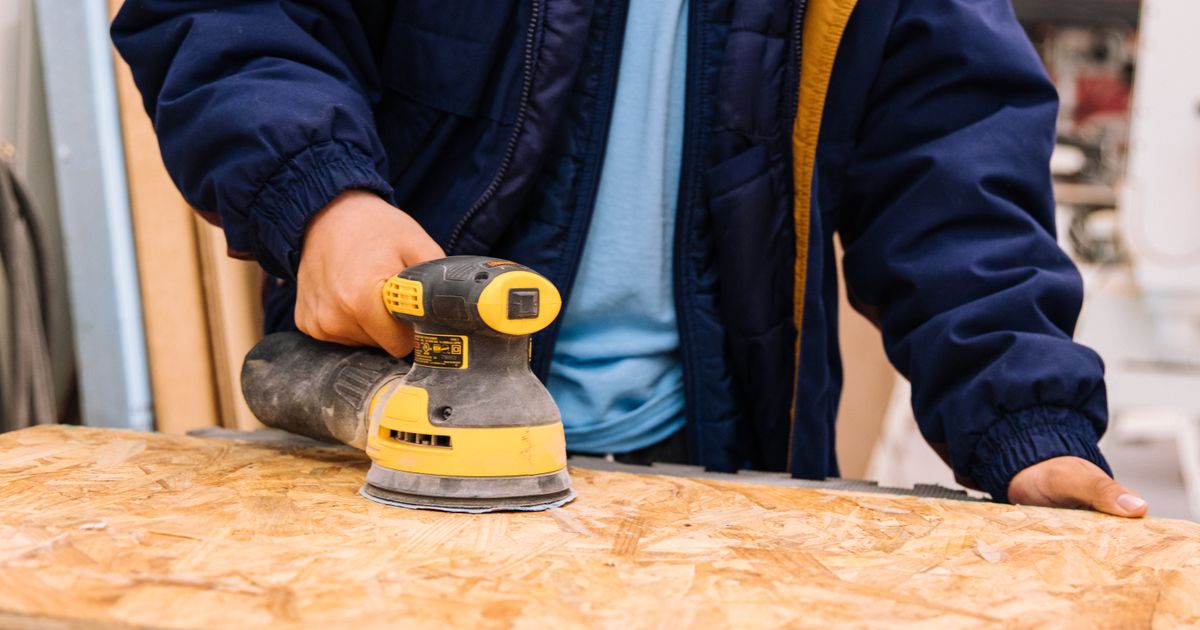
Un disco de lija es un abrasivo revestido que se fija a una lijadora orbital mediante un respaldo de velcro (sistema hook & loop) o autoadherible (PSA); una banda de lija es un bucle continuo de tela abrasiva para lijadoras de banda y máquinas de banda ancha. Elige según cuatro especificaciones: grano (adecuado al material), número de grano (y su norma), tipo de respaldo o empalme y compatibilidad — patrón de orificios para discos, empalme y ancho para bandas.
Qué es realmente un abrasivo revestido
Los discos y las bandas son «abrasivos revestidos»: grano pegado a un respaldo flexible en vez de fusionado en una rueda sólida. Si lees las capas de abajo hacia arriba, la construcción es respaldo → capa base → grano abrasivo → capa de enlace → capa superior opcional (fuentes del sector). Las dos capas adhesivas cumplen la función estructural: la capa base asienta cada grano con la punta hacia arriba sobre el respaldo, y la capa de enlace une los granos y sostiene cada uno contra la fuerza lateral que intenta arrancarlo durante el corte (fuente técnica del sector).
Esto importa al comprar porque dos productos pueden llevar el mismo grano y el mismo número de grano, pero comportarse de manera muy distinta. Las construcciones de primera usan resina fenólica en las capas base y de enlace y la curan por completo — un curado fenólico real tarda horas, no minutos (patentes sobre ciclos de curado de abrasivos revestidos). Un producto barato y mal curado pierde el grano pronto y trabaja caliente. La diferencia está en películas adhesivas invisibles, no en algo que puedas ver en la foto de una publicación — justo por eso las especificaciones honestas y documentadas importan más aquí que un precio anunciado bajo.
Disco de lija frente a banda de lija, de un vistazo
| Disco de lija | Banda de lija | |
|---|---|---|
| Forma | Disco plano con abrasivo revestido | Bucle continuo de tela abrasiva |
| Herramienta compatible | Lijadora orbital / roto-orbital (DA) | Lijadora de banda, lijadora de banda angosta, máquina de banda ancha |
| Sujeción | Respaldo de velcro (sistema hook & loop) o autoadherible (PSA) | Empalme unido (traslapado o a tope) |
| Respaldo | Papel, película, tela o malla | Tela (peso J / X / Y) |
| Especificación clave de compatibilidad | Patrón de orificios ↔ plato | Ancho, longitud y dirección del empalme |
| Compradores principales | Repintado automotriz, metalmecánica, carpintería | Carpintería (~50%), fabricación de metal (~25%), MRO (~15%) |
Los discos de lija lideran el mercado de accesorios de lijado con una participación de 35.2%; las bandas son la mayor forma individual de abrasivo revestido, con ~29.5% del mercado de revestidos (r05-segments-products.md; fuente del sector, 2025).
Paso 1 — ajusta el grano al material
La elección del grano depende más de la pieza de trabajo que cualquier otra decisión, sobre todo en las bandas de lija.
| Grano | Ideal para | Característica |
|---|---|---|
| Óxido de aluminio | Madera dura o blanda, metal no ferroso, algunos aceros; el único grano que suele almacenarse en granos finos 240–600 | El caballo de batalla versátil |
| Alúmina de zirconio | Madera dura, acero, remoción de material pesada | Autoafilable; precio intermedio entre óxido de aluminio y cerámico |
| Alúmina cerámica | Metales sensibles al calor, aleaciones duras, desbaste a alta presión | Autoafilable y con el corte más frío; intervalo habitual de grano ~24–120 |
| Carburo de silicio | Vidrio, plástico, hule, cerámica, piedra/mampostería | Afilado, friable |
Fuente: referencias del sector, 2024–2026. En los discos revestidos, el óxido de aluminio, la alúmina cerámica y el carburo de silicio son los granos comunes unidos a respaldos de papel, película, tela o malla (r05-segments-products.md).
Paso 2 — lee el número de grano y su norma
El grano es la designación del tamaño de la partícula: los números bajos son gruesos y agresivos, mientras que los altos son finos para acabado. El detalle es que el mismo número significa cosas distintas en diferentes sistemas. El grano revestido se clasifica en la escala FEPA «P» (con prefijo P, p. ej., P120) en Europa y Canadá, o en la escala ANSI/CAMI (sin prefijo) en EU. Ambas coinciden bastante hasta cerca de 180–220 y luego divergen mucho: en el extremo fino, US/CAMI 600 ≈ FEPA P1200 (varias tablas, 2025–2026). Por eso, un disco «320» no tiene el mismo grano en ambos sistemas — FEPA P320 ≈ 36 µm frente a CAMI 320 ≈ 29 µm (tablas de referencia).
| Grano FEPA P | ≈ Micrón (µm) | Uso típico |
|---|---|---|
| P40 | ~425 | Remoción de material pesada, desbaste de soldadura |
| P60 | ~269 | Desbaste agresivo, eliminación de pintura/óxido |
| P80 | ~201 | Emparejado (blending) general |
| P120 | ~125 | Formado general, preacabado |
| P180 | ~82 | Emparejado (blending) ligero |
| P220 | ~68 | Lijado final antes del acabado |
| P400 | ~35 | Acabado fino |
| P600 | ~25.8 | Preparación para pintura |
Fuente: tablas de referencia / ISO 6344, 2025–2026. P220 es la línea divisoria: P12–P220 son macrogranos (clasificados por tamiz según ISO 6344-2:2021) y P240–P5000 son microgranos (clasificados por sedimentación según ISO 6344-3:2021). Los grados FEPA P también mantienen tolerancias de tamaño de partícula más estrechas que CAMI, por lo que un P120 corta un poco más fino y uniforme que un CAMI 120 (fuente del sector, 2025). Para consultar una tabla de equivalencias más detallada por aplicación, revisa nuestra tabla de granos abrasivos para metalmecánicos.
Secuencias de grano típicas
Avanza por los granos — la regla de oro aceptada es no saltar más de un paso de grano en la secuencia, o dejarás rayas profundas que el siguiente grano no podrá eliminar (fuentes del sector).
- Madera: P80–100 para quitar marcas de maquinado → P120–150 para dar forma → P180–220 antes del tinte; P320–400 para capas transparentes sobre madera dura (fuentes del sector).
- Preparación para pintura / recubrimiento: trabajo de decapado con grano P80 grueso, avanzando hasta P180–320 para difuminar bordes y lijar antes de pintar.
- Pulido de metal / plástico: P600 y más fino, hasta P1000–1200 antes del pulido.
- Secuencias de grano para bandas de lija: la madera se desbasta con 80–120 y luego se avanza a 220+; el metal ferroso empieza grueso, en 36–60, para remoción de material; el no ferroso (aluminio, latón) se trabaja en 120–320 (fuentes del sector, 2024–2026).
El predominio del grano sobre las demás variables no es sólo sabiduría de taller. En un estudio controlado de lijado con banda sobre madera de Pinus elliottii, el tamaño del grano fue el único factor que afectó de manera significativa tanto la temperatura de la pieza de trabajo como la rugosidad superficial — la velocidad de la banda y la presión no lo hicieron (Alves et al., 2015, CERNE).
Paso 3 — elige el respaldo y la compatibilidad del disco
Dos respaldos dominan los discos de lija, y la elección depende de la reutilización y la sensación, no del corte.
| Atributo | Velcro (sistema hook & loop) (HLL) | Autoadherible (PSA) |
|---|---|---|
| Sujeción | La tela de bucles se agarra a los ganchos del plato | El adhesivo se pega a un plato liso |
| ¿Reutilizable? | Sí — despega, limpia y vuelve a colocar | No — un solo uso después de levantarlo |
| Sensación de contacto | Ligera amortiguación, sigue los contornos | Más rígido y plano, deja planos más definidos |
| Ideal para | Curvas, emparejado (blending), cambios frecuentes de grano | Nivelado totalmente plano, lijadoras de disco estacionarias |
| Costo unitario | ~2× el de un disco autoadherible (PSA), pero con muchos usos cada uno | Más barato por disco, de un solo uso |
Fuente: referencias del sector. El velcro (sistema hook & loop) se ha convertido en la opción predeterminada para el lijado roto-orbital y de doble acción porque permite cambiar los discos sin herramientas y reutilizarlos, y desplaza de forma constante al sistema autoadherible (PSA) en los talleres (r05-segments-products.md). Nota sobre la marca: «Velcro» es una marca registrada, por lo que el término genérico correcto es sistema hook & loop. Para hacer coincidir el respaldo y los orificios de polvo con tu lijadora específica, consulta nuestra guía de discos de lija autoadheribles (PSA) frente a velcro (sistema hook & loop) y patrones de orificios para polvo.
Patrones de orificios: la compatibilidad es la causa principal de devoluciones
La mayoría de los discos de velcro (sistema hook & loop) están perforados para que la aspiración de la lijadora extraiga las virutas a través del disco y el plato. La restricción es la alineación: un disco con patrón de orificios sólo extrae si sus orificios coinciden con los del plato. La cantidad, los diámetros y los círculos de pernos de los orificios no están estandarizados entre marcas — los patrones de 49 orificios, multiperforados, de 6 orificios y los patrones DA tradicionales de 5/8 orificios son distintos. Los discos «universales» funcionan con perforaciones adicionales para que suficientes orificios se superpongan a cualquier plato común, no porque coincidan con una sola geometría ISO (USPTO 10,099,343). Los dos diámetros roto-orbitales dominantes son 125 mm (5 in) y 150 mm (6 in). Confirma siempre la coincidencia del patrón con el plato, no sólo el diámetro.
Un disco de malla evita por completo los orificios: el grano sobre una malla abierta de poliamida permite aspirar en casi toda la cara, de modo que una partícula de lijado nunca está a más de 0.5 mm de un orificio de extracción, y datos del sector señalan una eliminación aproximada de 99.97% del polvo menor a 0.3 mm. La malla resiste mucho mejor el embotamiento en madera blanda resinosa, MDF y lijado de acabado cuando se usa con extracción activa — esto importa porque el lijado en seco genera polvo respirable y, conforme a la norma de la OSHA sobre sílice cristalina, el PEL de la industria general es 50 µg/m³ (TWA de 8-hr), con un nivel de acción de 25 µg/m³ y controles de ingeniería (extracción de polvo) como primera línea de defensa (OSHA).
Paso 4 — para las bandas, revisa el empalme y el peso del respaldo
Una banda de lija es un respaldo de tela revestido de grano y capas base/de enlace de resina, cortado al ancho y unido en un bucle. Dos especificaciones determinan su vida útil y su acabado.
La unión (empalme) es el punto más débil de la banda y determina la dirección de marcha:
| Tipo de empalme | Dirección | Notas |
|---|---|---|
| Traslapado | Sólo unidireccional (flecha de marcha en el respaldo) | La unión original de la banda; extremos biselados y traslapados ¼–½ in |
| A tope | Bidireccional (se puede voltear para prolongar la vida útil) | Más delgado y resistente; la superficie «ininterrumpida» reduce las marcas |
Fuente: referencia del sector, 2024. El peso del respaldo es la palanca de durabilidad: la tela se clasifica en peso J (el más ligero y flexible) → peso X (~6 oz/yd², el más ligero usado en bandas anchas) → peso Y (~8 oz/yd², el respaldo pesado común, normalmente de poliéster 100%, combinado con zirconio/cerámico de grano grueso para remoción de material pesada) (fuentes del sector, 2011–2026). El algodón J/X se flexiona mejor para contornos y acabado; el poliéster es impermeable y resistente al desgarro.
La tasa de corte y el calor de la banda se rigen por la velocidad superficial, no sólo por el grano, mediante SFPM = RPM × 0.262 × diámetro de la rueda motriz (in) (referencia del sector, 2026). El calor es el enemigo: trabajar demasiado rápido vidria la madera, quema los plásticos y puede revenir el acero templado — baja la velocidad en materiales sensibles al calor y deja que el grano cerámico haga el trabajo de metal a alta presión. Sin embargo, la relación entre grano y fuerza no es lineal: en un estudio de lijado con banda sobre Eucalyptus grandis, la banda de grano 100 produjo la menor fuerza de corte de las tres probadas, y los mejores acabados se lograron con mayor presión de contacto (Varasquim et al., 2012, CERNE). Para profundizar en la selección de grano, empalme y material de la banda, consulta nuestra guía para seleccionar bandas de lija.
La recomendación de Whitby Abrasives
Whitby Abrasives es un distribuidor canadiense del segmento de valor que almacena abrasivos revestidos de grado industrial en su bodega de Whitby, Ontario — con especificaciones documentadas, nunca de juguete. Como la calidad del aglutinante y el curado es invisible en una foto, su enfoque es la honestidad de las especificaciones: indicar el grano, el número de grano, el peso del respaldo y la norma de clasificación (FEPA P frente a ANSI) para que los compradores transfronterizos sepan exactamente qué reciben, en vez de competir sólo por el precio anunciado más bajo. La objeción común — que un disco más barato debe ser de menor calidad — se invierte cuando las especificaciones están declaradas y sustentadas: pagas por el grano correcto y un curado del aglutinante documentado, no por un sobreprecio de marca.
- Explora nuestra colección de bandas de lija para encontrar granos gruesos de remoción de material en zirconio y cerámico.
- Los talleres de repintado y reparación de paneles pueden empezar con la colección de artículos esenciales para talleres de hojalatería y pintura para consumibles de preparación de pintura y difuminado de bordes.
Preguntas frecuentes
¿Cuál es la diferencia entre un disco de lija y una banda de lija?
Un disco de lija es un abrasivo revestido plano que se fija a una lijadora orbital o roto-orbital mediante un respaldo de velcro (sistema hook & loop) o autoadherible (PSA). Una banda de lija es un bucle continuo de tela abrasiva que corre sobre rodillos en una lijadora de banda, una lijadora de banda angosta o una máquina de banda ancha. Los discos sirven para trabajos puntuales y de contorno; las bandas, para remoción de material continua y lijado de bordes.
¿Un disco de lija P120 es igual que uno de grano 120?
No necesariamente. El grano FEPA «P» (usado en Canadá y Europa) y el grano ANSI/CAMI (usado en EU) coinciden de cerca hasta aproximadamente 180–220 y luego divergen. En el extremo fino, US/CAMI 600 equivale aproximadamente a FEPA P1200. Revisa siempre el prefijo «P» y la norma de clasificación indicada, especialmente al comprar entre países.
¿Con qué grano debo empezar para lijar madera?
Para madera sin acabado, empieza alrededor de P80–100 para quitar marcas de maquinado, avanza a P120–150 para dar forma y alisar, y luego a P180–220 antes del tinte. Para capas transparentes en madera dura, termina con P320–400. No saltes más de un paso de grano en la secuencia, o dejarás rayas que el siguiente grano no podrá eliminar.
¿Qué grano es mejor para lijar metal?
Para metales sensibles al calor y aleaciones duras, la alúmina cerámica corta más frío y dura más. La alúmina de zirconio es una opción autoafilable de precio medio para acero y remoción de material pesada. El óxido de aluminio es el caballo de batalla versátil para metal de uso general y el grano más disponible en granos finos de acabado.
¿Por qué importan los patrones de orificios de los discos de lija?
Un disco perforado sólo extrae polvo si sus orificios se alinean con los del plato de respaldo de tu lijadora. La cantidad y separación de orificios no están estandarizadas entre marcas, por lo que cada plato necesita un patrón coincidente o uno «universal» con perforaciones adicionales. Los orificios mal alineados hacen que el disco se embote, trabaje caliente y se desgaste antes de tiempo.
¿Debo elegir discos de velcro (sistema hook & loop) o autoadheribles (PSA)?
El velcro (sistema hook & loop) es reutilizable y sigue los contornos, por lo que es la opción predeterminada para lijadoras roto-orbitales y de doble acción, y para trabajos con cambios frecuentes de grano. El sistema autoadherible (PSA) queda más plano y rígido, así que sobresale en nivelado totalmente plano y lijadoras de disco estacionarias, pero es de un solo uso una vez despegado.
Fuentes
- Organismos de normalización: clasificación dimensional del grano revestido ISO 6344-2:2021 / 6344-3:2021 — https://www.iso.org/standard/78220.html; normas FEPA — https://fepa-abrasives.org/abrasives/standards/; norma de la OSHA sobre sílice cristalina respirable — https://www.osha.gov/sites/default/files/publications/OSHA3682.pdf
- Alves, M. C. de S.; Santiago, L. F. F.; Gonçalves, M. T. T.; Valarelli, I. De D.; Varasquim, F. M. F. de A. (2015). Efectos de la velocidad de la banda, la presión y el tamaño de grano en el lijado de madera de Pinus elliottii. CERNE. DOI: https://doi.org/10.1590/01047760201521011216
- Varasquim, F. M. F. de A.; Alves, M. C. de S.; Gonçalves, M. T. T.; Santiago, L. F. F.; de Souza, A. J. D. (2012). Influencia de la velocidad de la banda, los tamaños de grano y la presión en el lijado de madera de Eucalyptus grandis. CERNE. DOI: https://doi.org/10.1590/s0104-77602012000200007
Compra en Whitby Abrasives
Abrasivos de grado industrial para fabricantes canadienses — disponibles para pedido en línea y recolección local en Whitby, Ontario.
Catálogos de productos: Discos de corte • Discos de desbaste • Discos de láminas (discos flap) • Bandas de lija • Discos de lija • Discos de limpieza (clean & strip) • Ruedas de pulido • Ruedas de desbarbado de hule • Ruedas de desbarbado de fibra de nailon • Ruedas de láminas montadas • Discos vitrificados para esmeril de banco • Accesorios
📧 info@whitbyabrasives.com • 📍 1450 Victoria Street East, unidad 2, Whitby, ON L1N 0N7 • Acerca de nosotros • Contáctanos