
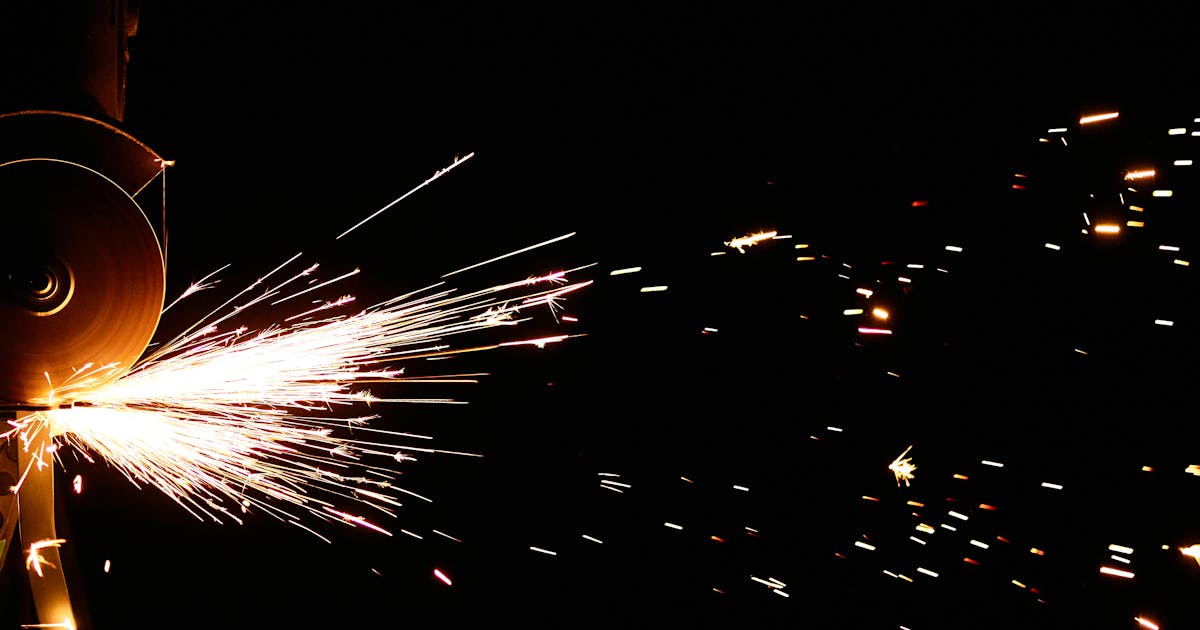
Las soldaduras limpias comienzan mucho antes del primer pase, y un buen acabado distingue un trabajo profesional de uno burdo. Ya sea que rebajes un cordón MIG grueso en acero estructural o emparejes (blending) una soldadura TIG delicada en acero inoxidable, el abrasivo que elijas determina tu velocidad, el aporte de calor y la superficie final. Los discos de desbaste se encargan de la remoción gruesa de soldadura, los discos de láminas (discos flap) toman el relevo para el emparejado (blending) y el difuminado, y los productos de acondicionamiento de superficie dejan un acabado uniforme listo para pintura o inspección.
Preparación de soldadura: forma una unión sólida
Una buena remoción de soldadura comienza con una buena preparación. Antes de soldar, las uniones suelen requerir biselado, desbaste de la cara de raíz y limpieza hasta el metal brillante para eliminar la cascarilla de laminación, el óxido y los contaminantes que causan porosidad e inclusiones.
- Biselado y preparación de la unión: Usa un disco de desbaste de centro deprimido (Tipo 27) o un disco de corte delgado para crear biseles en los bordes de la placa. Para lograr ángulos uniformes en placa más gruesa, una herramienta de biselado especializada se paga sola gracias a la calidad de la soldadura.
- Limpieza hasta el metal brillante: Un disco de láminas de grano grueso (P40 a P60) o un disco de fibra con abrasivo revestido elimina la cascarilla y el óxido sin formar surcos. En acero inoxidable, cambia a un producto exclusivo para ese material a fin de evitar la contaminación por acero al carbón.
- Rectificado de la cara de raíz: Los discos de limpieza (clean & strip) y las ruedas de limpieza y decapado eliminan recubrimientos antiguos, pintura y oxidación alrededor de la unión sin desgastar el metal base.
Remoción de la soldadura: adapta la herramienta al cordón
El tamaño y el material de la soldadura determinan el producto:
- Sobreespesores de soldadura grandes en acero al carbón y acero estructural: Empieza con un disco de desbaste Tipo 27 de alúmina de zirconio (ZA), P24 a P36. Desbasta a un ángulo de 15 a 30 grados y deja que el disco haga el trabajo.
- Emparejado (blending) y difuminado de la soldadura: Cambia a un disco de láminas Tipo 29, P40 a P60, que elimina el metal sobresaliente restante y deja un acabado que puedes refinar aún más.
- Soldaduras en acero inoxidable: Usa grano cerámico (CE) para limitar el calor y evitar la decoloración y la sensibilización. Trabaja por etapas y mantén fría la pieza.
Acabado: deja la superficie lista para inspección o recubrimiento
Una vez que la soldadura queda al ras, el pase final determina si la unión aprueba la inspección o recibe el recubrimiento de manera uniforme:
- Avanza de forma gradual a discos de láminas más finos (P80 a P120) para eliminar los rayones gruesos.
- Termina con discos de acondicionamiento de superficie no tejidos para obtener una textura satinada uniforme, sobre todo en acero inoxidable visible.
- Para inspeccionar soldaduras, una superficie uniforme y sin rayones hace mucho más confiables la inspección con líquidos penetrantes y la inspección visual.
Errores comunes que cuestan tiempo y metal
- Formar surcos en el metal base: Un ángulo demasiado pronunciado o un grano demasiado agresivo se clava en la superficie. Usa un ángulo más bajo y el grano adecuado para la etapa.
- Demasiado calor: El exceso de calor deforma las secciones delgadas y sensibiliza el acero inoxidable. Usa abrasivos afilados y de corte libre, y no permanezcas en un solo punto.
- Omitir pasos de grano: Pasar directamente de un desbaste grueso a un acabado fino deja rayones profundos que se transparentan a través de los recubrimientos.
Compra en Whitby Abrasives
Abrasivos de grado industrial para fabricantes canadienses, disponibles para compra en línea y recolección local en Whitby, Ontario.
Catálogos de productos: Discos de corte • Discos de desbaste • Discos de láminas • Bandas de lija • Discos de lija • Discos de limpieza (clean & strip) • Ruedas de pulido • Ruedas de desbarbado de hule • Ruedas de desbarbado de fibra de nailon • Ruedas de láminas montadas • Discos vitrificados para esmeril de banco • Accesorios
Correo electrónico info@whitbyabrasives.com • Ubicación 1450 Victoria Street East, unidad 2, Whitby, ON L1N 0N7 • Quiénes somos • Contáctanos